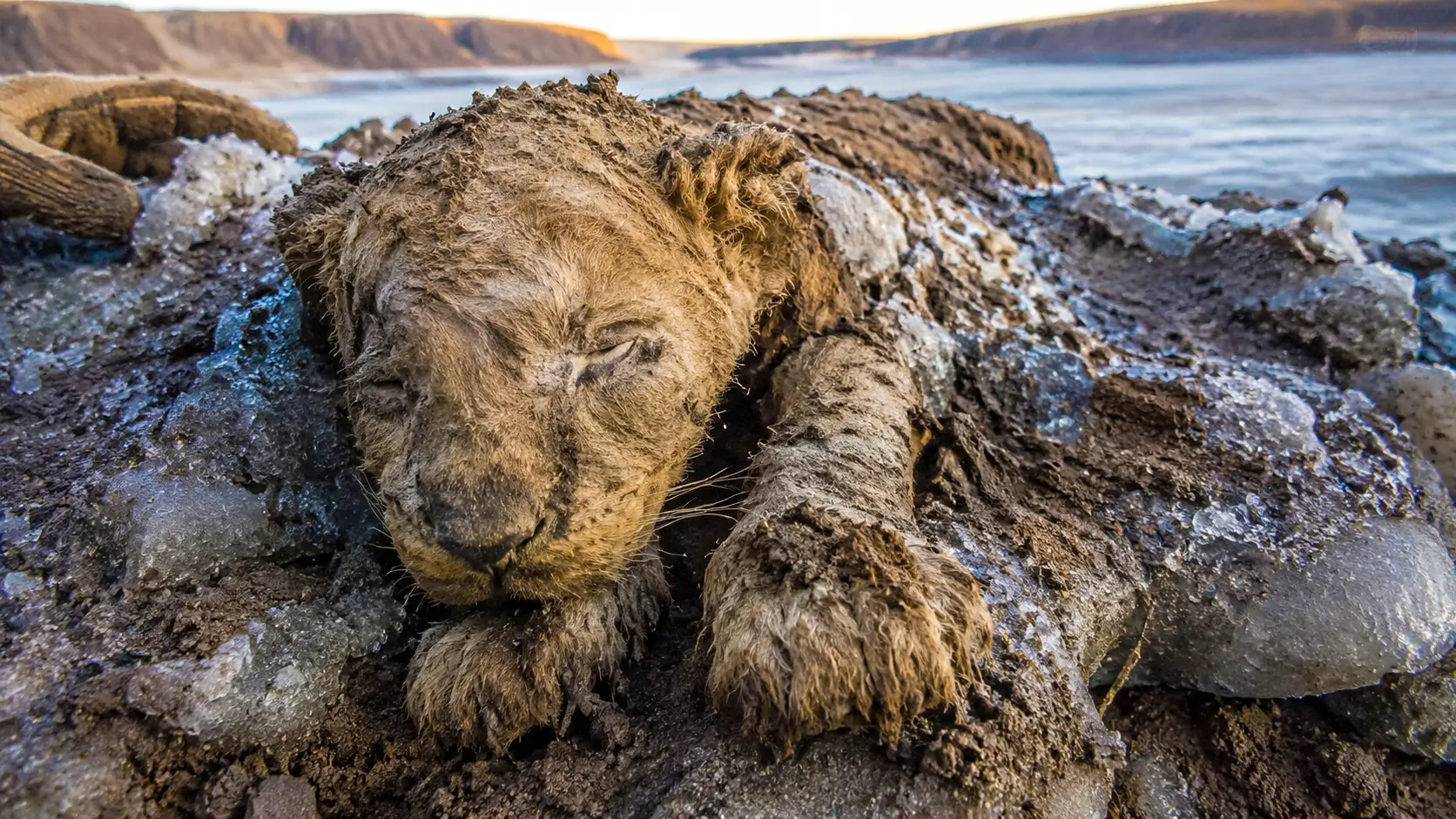
Two remarkably preserved young lions have been excavated from the frozen ground of Yakutia, revealing a fascinating glimpse into the distant past.
Two prehistoric felines unearthed almost side by side on the icy banks of the semyuelyakh river
In 2017, a local researcher hunting for mammoth tusks stumbled upon the first mummified body. This young male, later named Boris, was lying ten meters beneath the surface and dated to approximately 43,000 years ago.
The following year, another specimen was uncovered just fifteen meters away. Named Sparta, this female had also died young, and both animals were about the size of an adult housecat when they perished.
Initially, scientists believed they were siblings due to the proximity of their finds. However, carbon-14 dating revealed a significant temporal gap of 15,000 years between their deaths.
Exceptional preservation that sheds light on species evolution
The state of preservation of Sparta’s remains astonished the team led by Professor Love Dalén. Her body retained its fur and whiskers, making her the best preserved ice age animal ever discovered.
Scientist Valery Plotnikov noted intact internal organs in Sparta’s remains. While Sparta had a gray-brown coat, Boris exhibited a lighter coloration, suggesting a potential adaptation of fur color with age.
A geological trap that buried two distinct litters in the same location
X-ray examinations ruled out predation as a cause of death. Neither of the lions showed bite marks, but the bones indicated damage from soil pressure.
This evidence points to the area being a den prone to collapses, leading to two similar accidents occurring thousands of years apart, effectively making it a trap for the animals separated by 15 millennia.
Moreover, analysis of their teeth revealed that these prehistoric lions grew faster than modern lions. This accelerated growth likely aided their survival in the harsh Siberian climate, necessitating an earlier transition to a carnivorous diet.
Rare fossils confirming the accuracy of ancient rock art
Before this discovery, knowledge of the cave lion’s form relied heavily on prehistoric art. Numerous depictions of the species exist in France’s Chauvet Cave. These new fossils finally validate the accuracy of those age-old representations.
Overall, only four lion cubs have been discovered in the Yakutia region. However, the rapid thawing of Siberian permafrost is ongoing, and it is likely that more prehistoric remains will soon surface.