Underneath the ocean’s surface, unseen organisms create vital calcium carbonate structures that support marine ecosystems. Yet, these shells are becoming harder to produce, raising questions about broader disruptions to marine life and climate.
Progressive ocean acidification driven by CO₂ absorption
The ocean provides humanity with an immense service by absorbing about one-quarter of the CO₂ emitted through human activities. Without this enormous carbon sink, atmospheric warming would escalate at an even faster rate. However, the CO₂ does not simply vanish; once dissolved, it gradually alters the chemistry of seawater.
CO₂ reacts with water to form carbonic acid, which then releases hydrogen ions. This process has led to a decrease in the average pH of surface waters by approximately 0.1 units since pre-industrial times, equating to nearly a 30 percent increase in acidity. While this change might seem minor, the pH scale is logarithmic, indicating a significant shift.
Calcifying microorganisms and the pivotal role of coccolithophores
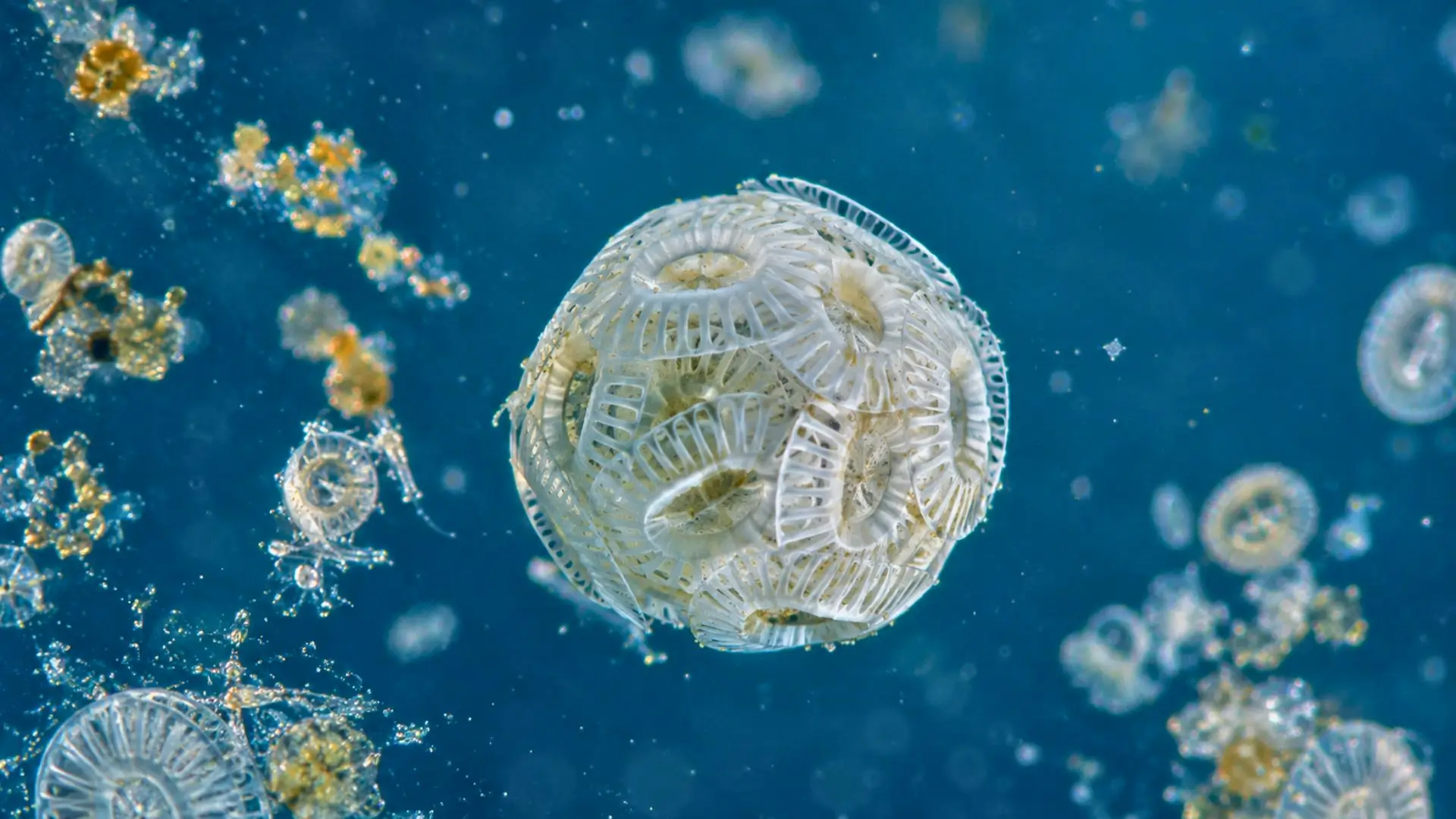
Among the affected organisms are coccolithophores, tiny unicellular algae that float in the illuminated layers of the ocean. Each one is enveloped by tiny plates of calcium carbonate known as coccoliths. Assembled with remarkable precision, these plates form a protective mosaic that resembles a sculpted sphere when viewed under a microscope.
Their small size conceals an enormous impact. Coccolithophores engage in photosynthesis, provide nourishment to other organisms, and produce a substantial portion of the living calcium carbonate found in surface waters. Recent research estimates that their calcite comprises nearly 90 percent of the observed stock among primary pelagic calcium producers.
When these organisms die, some of their plates sink into the depths, contributing to the exchange of carbon between the atmosphere and the ocean floor. Their role is complex because while calcification can release CO₂ locally, the falling organic matter supports deep storage.
Disruption of calcification and the fragility of marine carbonate structures
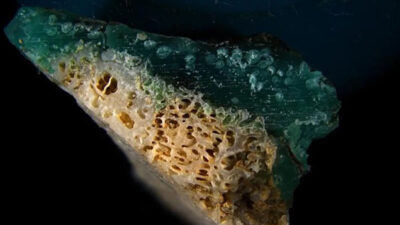
In more acidic waters, carbonate ions become less available. These ions are essential building blocks for creating calcium carbonate. Consequently, some organisms must expend more energy to build or maintain their shells. Researchers observe disrupted growth, weakened structures, and increased dissolution among several calcifying species.
However, the response of coccolithophores varies across species, temperatures, nutrient availability, and adaptability. Experimental work and fossil analyses reveal contrasting reactions. The thinning of the plates is indeed a concerning signal but does not universally condemn all calcifying plankton species.
Ecological and climatic consequences of thinner marine plankton shells
A shell that is slightly thinner may seem trivial. However, it can affect the protection of the cell, its sinking speed, or the energy available for reproduction. On a larger scale, these changes could influence marine food webs, from zooplankton to the fish that sustain many human communities.
The danger also arises from the accumulation of pressures. Acidification does not affect a static ocean; it compounds the impact of warming, deoxygenation, pollution, and nutrient shifts. The Intergovernmental Panel on Climate Change points out that these transformations are already disrupting the distribution and abundance of organisms at various levels of the food chain.
Thus, coccoliths serve as tiny archives of planetary change, reflecting water composition and illustrating how rapidly human emissions shift oceanic balances. The key question may no longer be if the ocean is changing, but how many microscopic signals must emerge before their implications become impossible to ignore.