In the late 1970s, China embarked on an ambitious reforestation campaign that has unveiled unexpected benefits from the billions of trees planted along desert borders.
A remarkable growth
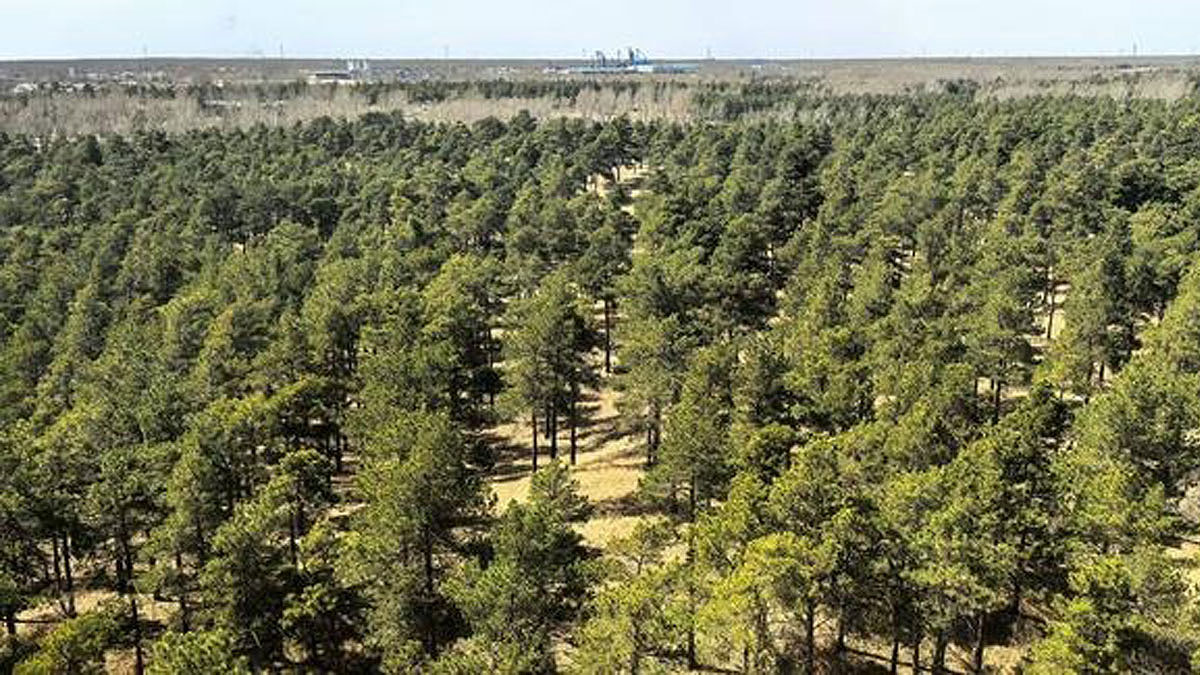
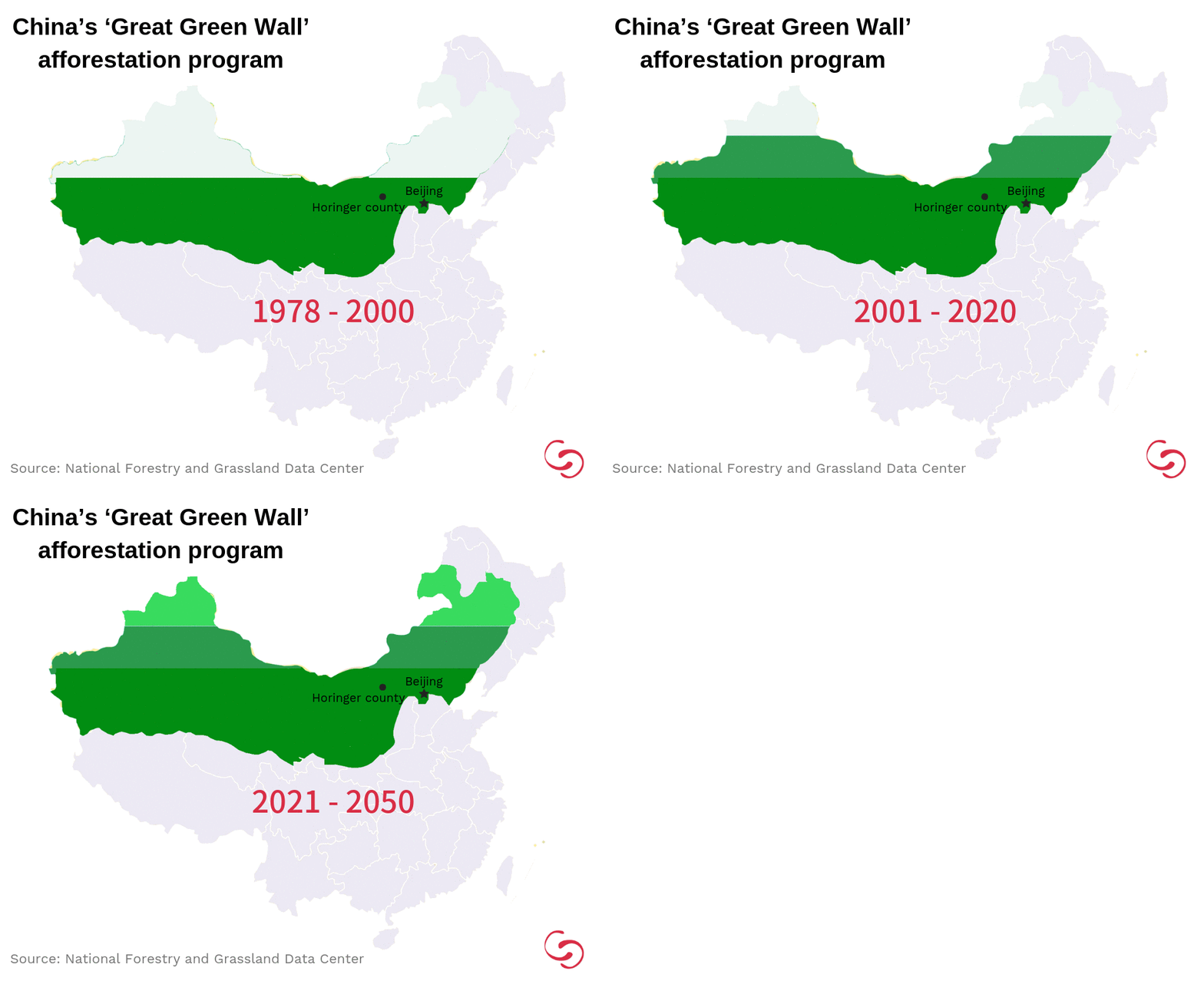
The majority of these trees form the “Green Great Wall” of China, a green corridor primarily intended to combat sandstorms originating from the north. In southern China, another natural barrier plays a crucial role in stabilizing soils and reducing natural disaster risks in this monsoon-affected region.
Today, it is estimated that these “artificial forests” cover 90 million hectares, accounting for more than one-third of China’s total forested area. To better understand their environmental impact, researchers have utilized extensive satellite data and machine learning.
Overall, it has been found that the vegetation cover of these new forests is growing three to four times faster than that of their natural counterparts. This accelerated growth is largely attributed to the high concentration of young trees, which have more active metabolisms leading to increased CO2 absorption.
Comparisons with natural forests of similar composition also revealed a 4.6 percent greater average vegetation cover, indicating that planting techniques and soil preparation play a significant role. The most notable differences were observed in mixed and coniferous forests.
According to the study’s authors, published in *Geophysical Research Letters*, this trend illustrates the remarkable adaptability of certain trees to rising atmospheric CO2 levels.
They emphasize the importance of not viewing the world’s forests as a homogeneous entity in climate models, in order to accurately evaluate their role in mitigating climate change.
Earlier this year, a study focusing on the section of the Green Great Wall bordering the Taklamakan Desert suggested its transformation into a net carbon sink, absorbing 8.3 million tons of CO2 annually between 2004 and 2017, compared to 6.7 million tons emitted.