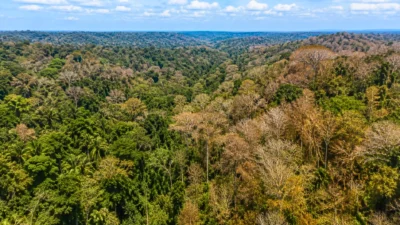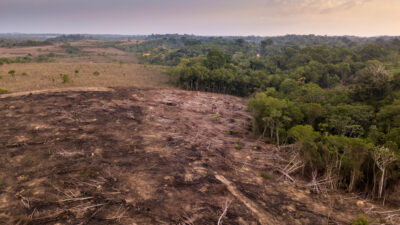
Can a forest take a hundred millennia to heal? Fossils from Wyoming indicate that 56 million years ago, a significant warming phase not only boosted tree growth but also abruptly opened their canopy, irrevocably altering the landscape.
In Wyoming, a lush forest faced an unrecognizable climate
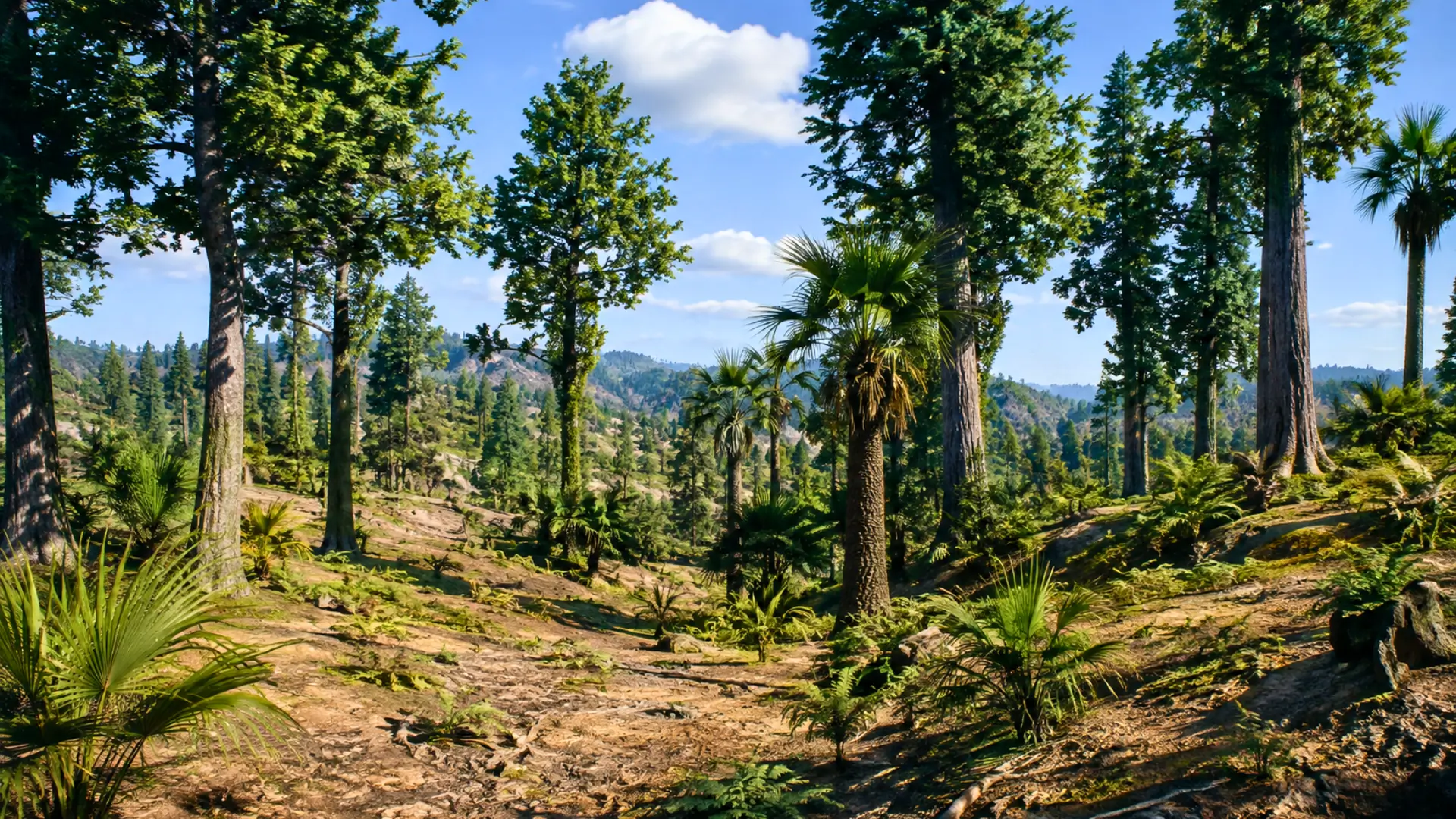
Imagine a time when the landscape of what is now Wyoming was covered in expansive forests featuring ancestors of today’s sequoias, walnuts, and elms. These ecosystems thrived with plants suited to temperate climates, until the Paleocene-Eocene Thermal Maximum struck around 56 million years ago, inundating the atmosphere with carbon.
Interestingly, the trees did not decline immediately. Initially, the increase in CO₂ appeared to enhance their growth, leading to denser forests. However, this temporary boost concealed a looming threat. As temperatures and aridity escalated, the benefits from CO₂ began to diminish, with the heat enforcing new ecological rules.
Cells smaller than a speck of dust revealed the canopy’s collapse
To reconstruct the appearance of these ancient forests, researchers did more than just tally fossilized leaves. They examined their microscopic cuticles -these protective films can persist in sediments for tens of millions of years. The shape of these cells indicates the light exposure received by the leaves.
A leaf growing in a dense canopy develops differently than one exposed to open sunlight. By comparing thousands of fossilized cells with those from modern forests in Central and South America, scientists created an indicator of forest density based on leaf surface area.
The findings were striking. As reported in a study published in August 2026 in Science, leaf cover decreased by about 60 percent over a few thousand years. The forest transformed into a much more open ecosystem, allowing more light and rainfall to reach the soils. This shift altered the water cycle and accelerated erosion.
As trees retreat, ferns and palms thrive in a warmer world
A forest collapse does not inevitably lead to a barren desert. In the Hanna Basin, fossils indicate a remarkable reconstruction of vegetation. Ferns began populating the newly opened spaces while palm trees and other heat-loving plants migrated northward.
This evolution presents an essential truth. A forest can remain green while becoming ecologically distinct. The loss of tall trees affects shade, humidity, and carbon storage and destabilizes soil. According to the US Geological Survey, these shifts have destabilized the landscape on a scale far exceeding individual forest patches.
The most staggering number isn’t the temperature, but the 100,000 years that followed
Eventually, the climate stabilized. Over long periods, the chemical weathering of rocks removed CO₂ from the atmosphere, leading to gradual cooling. Water availability improved, and canopies could begin to close again. However, this recovery was not measured in decades or even thousands of years.
Data suggest that the return to a dense forest took more than 100,000 years. A single climatic event can disrupt an ecosystem rapidly, but rebuilding it demands almost unimaginable time scales. Resilience exists, but it does not ensure a swift return to an original state.
While today’s conditions differ from those of the Eocene in terms of continents, species, and climate, these fossils highlight a troubling mechanism. Beyond a certain threshold, heat and dryness can neutralize the benefits of CO₂. The pressing question remains: can we recognize this threshold before crossing it?