Since the Industrial Revolution, humanity has generated an astonishing amount of waste that can be challenging to manage. Among the most troubling is the hundreds of thousands of radioactive barrels discarded in the Atlantic between 1950 and 1990.
Massive dumpings
During the early decades of civil nuclear activity, there was a prevailing belief that disposing of low-activity radioactive waste by dumping it in sealed metal barrels into the ocean was a relatively safe strategy. However, in 1975, the London Convention imposed strict limitations on this practice, which did not completely cease until the early 1990s.
Over approximately four decades, about 200,000 barrels were abandoned in the Atlantic Ocean, and it has only been recently that scientists have begun to investigate the environmental repercussions of these dumpings.
This past May, members of the Nodssum project, led by the National Center for Scientific Research, set out aboard the research vessel “Pourquoi Pas?”. The expedition conducted around twenty dives with the manned submersible Nautile in the northeastern Atlantic, exploring depths exceeding 4,700 meters.
A preliminary campaign in 2025 had already successfully mapped 3,355 barrels over an area of approximately 160 square kilometers. The latest mission focused on the most “interesting” containers.
Scientists descend 15,400 feet into Atlantic and find leaking radioactive waste barrels
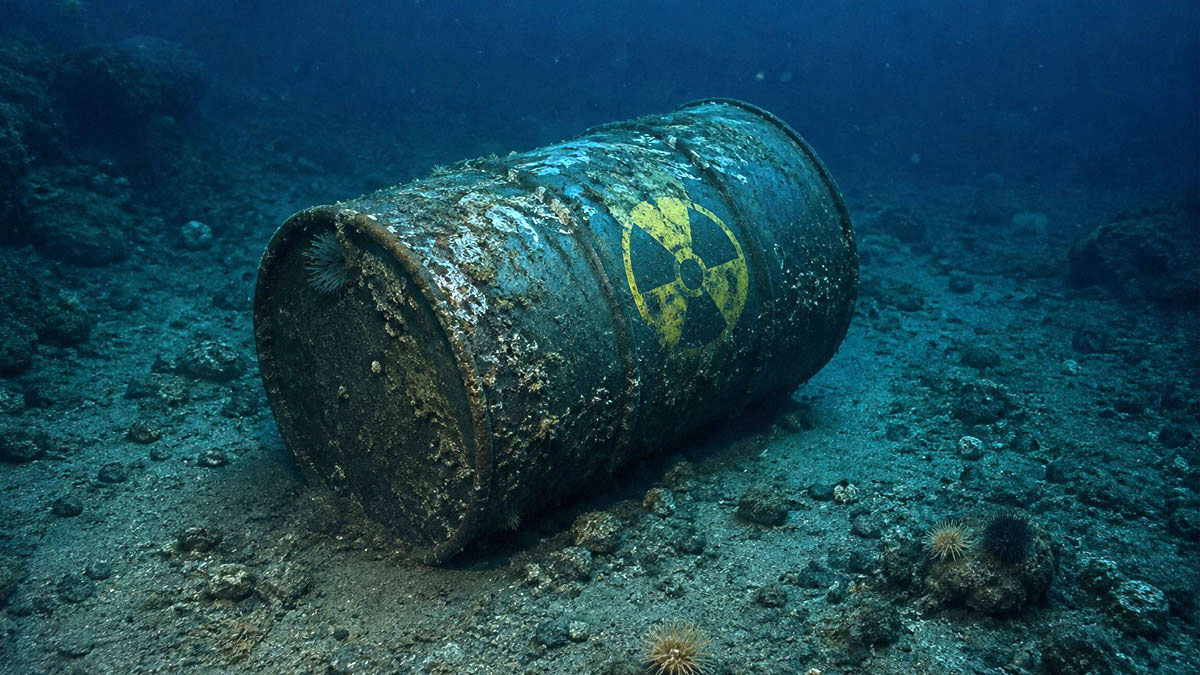
The expedition documented severely corroded barrels and spilled material on the seafloor at a site where more than 200,000 barrels of radioactive waste were dumped decades ago pic.twitter.com/vAq43R5ltZ
– Nature is Amazing ☘️ (@AMAZlNGNATURE) August 10, 2026
Lower radiation levels than expected
Overall, the barrels examined were found to be in an advanced state of deterioration, leading to significant leaks of their contents into the surrounding waters. Fortunately, in situ measurements indicated global radiation levels were lower than anticipated.
While radionuclides linked to the waste, such as cobalt-60 and niobium-94, were detectable, the research team reported being able to handle water, sediment, and marine organism samples without requiring extensive radiological protection gear. The next step will involve a more comprehensive study to determine the specific impact of this radiation on deep-sea life.
Researchers also noted marine animals, including anemones, sponges, and crabs, directly colonizing the barrels. This phenomenon is reminiscent of the wildlife reclaiming the Chernobyl exclusion zone shortly after the disaster.
It is important to recognize that this is not the only source of marine pollution. It is estimated that another 11 million tons of waste enters the oceans and seas each year.