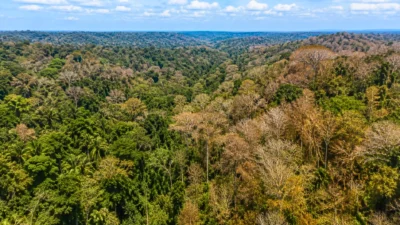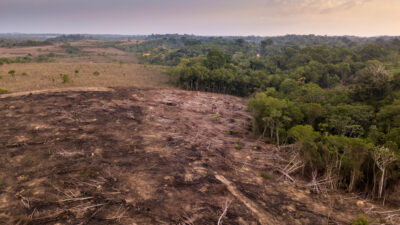
When the rainforest faces water scarcity, it does more than just suffer. A German study reveals that during the drought of 2023-2024, the Amazon triggered an invisible response made up of highly reactive molecules. Disturbingly, this response persists even after rain returns.
Signs of stress in the Amazon rainforest
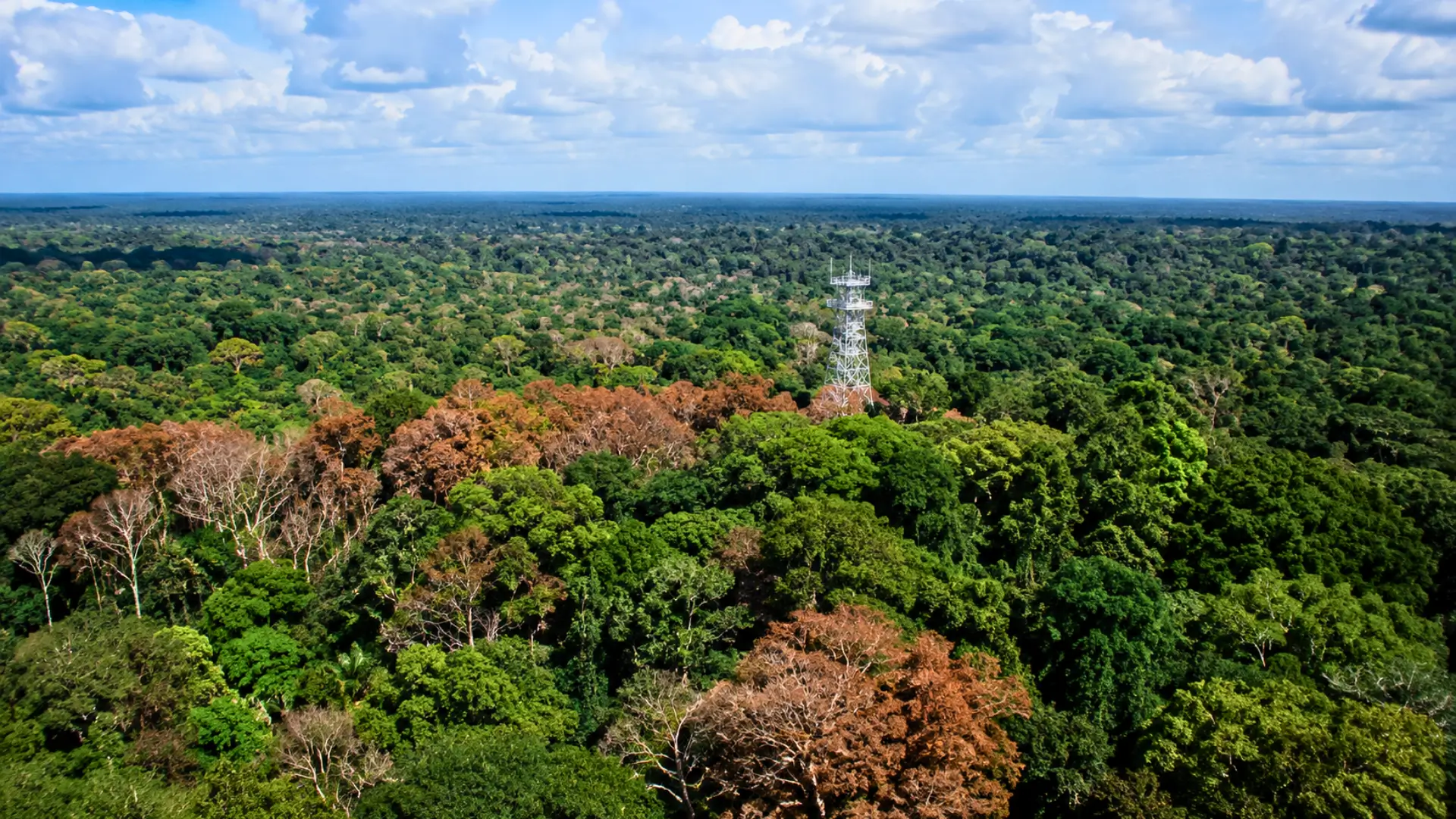
High above the canopy, at a height of 325 meters, the ATTO tower, located about 150 kilometers from Manaus, detected an invisible shift in the atmosphere. This was the first indication of trouble long before it was visible on the ground. Researchers from the Max Planck Institute for Chemistry recorded significant changes in plant emissions during the 2023-2024 El Niño phase.
These emissions belong to a category known as biogenic volatile organic compounds (BVOCs). In simpler terms, they are naturally released molecules from trees, some of which fragrance the air while others interact with the atmosphere. Their primary role may be to protect leaves from the harshness of heat, light, and drought.
The backdrop for these findings was anything but ordinary. The declared El Niño event in June 2023, as reported by NOAA, prompted one of the most severe droughts ever seen in the Amazon basin. It has now been shown that this crisis not only stressed the forest but also fundamentally altered its chemistry.
Trees activate a rare chemical defense against stress
The most striking result of this study is a notable 122 percent increase in the emission of sesquiterpenes during the drought. In contrast, levels of isoprene and monoterpenes remained relatively steady. This stark rise in sesquiterpenes hints at a precise, almost strategic response by the trees to a specific threat.
Why these particular molecules? Sesquiterpenes are highly reactive and serve as a chemical shield against oxidative stress, which occurs when toxic forms of oxygen accumulate in overheated leaves. Essentially, the trees deploy an emergency defense to protect their tissues from internal damage.
Persistent chemical response after the rain returns
This narrative could have ended with a strong response followed by a return to normalcy. However, that did not happen. After the peak of the drought and the subsequent return of rainfall, the forest continued to release unexpected compounds, including sesquiterpene alcohols like alpha-eudesmol.
This detail significantly alters the story. Observations of these molecules at unprecedented levels indicate that the forest’s metabolism does not simply revert to its prior state once the immediate threat subsides. Rather, it seems the Amazon retains a chemical memory of the ordeal, maintaining its defense long after the most intense climatic signal has faded.
For scientists, this persistence suggests that the forest may be less stable than previously thought. The idea of a straightforward return to normalcy becomes less plausible. It seems the forest may undergo reconfiguration, at least temporarily, which could impact air quality, local atmospheric chemistry, and eventually cloud formation.
An invisible response signaling a new normal for the Amazon
This study does not predict an imminent collapse of the rainforest, but it uncovers a hidden cost of survival. The energy required to produce these molecules, maintain this defense, and adjust its metabolism adds up, especially since the trees are already struggling with heat and water scarcity. A short-term win can lead to long-term fatigue.
Ultimately, this situation extends beyond botany. BVOCs influence atmospheric chemistry, including ozone, aerosols, and even clouds. When the world’s largest tropical rainforest alters its chemical signature, it is not merely a laboratory detail. It is a signal that may have implications for regional climate and potentially more extensive impacts down the line.
Moreover, the ongoing implications of climate change mean that severe droughts and intense El Niño events could become more frequent. This once-temporary defense mechanism may solidify into a new standard for the Amazon. The forest might already be quietly adapting to thrive in an increasingly hostile environment.