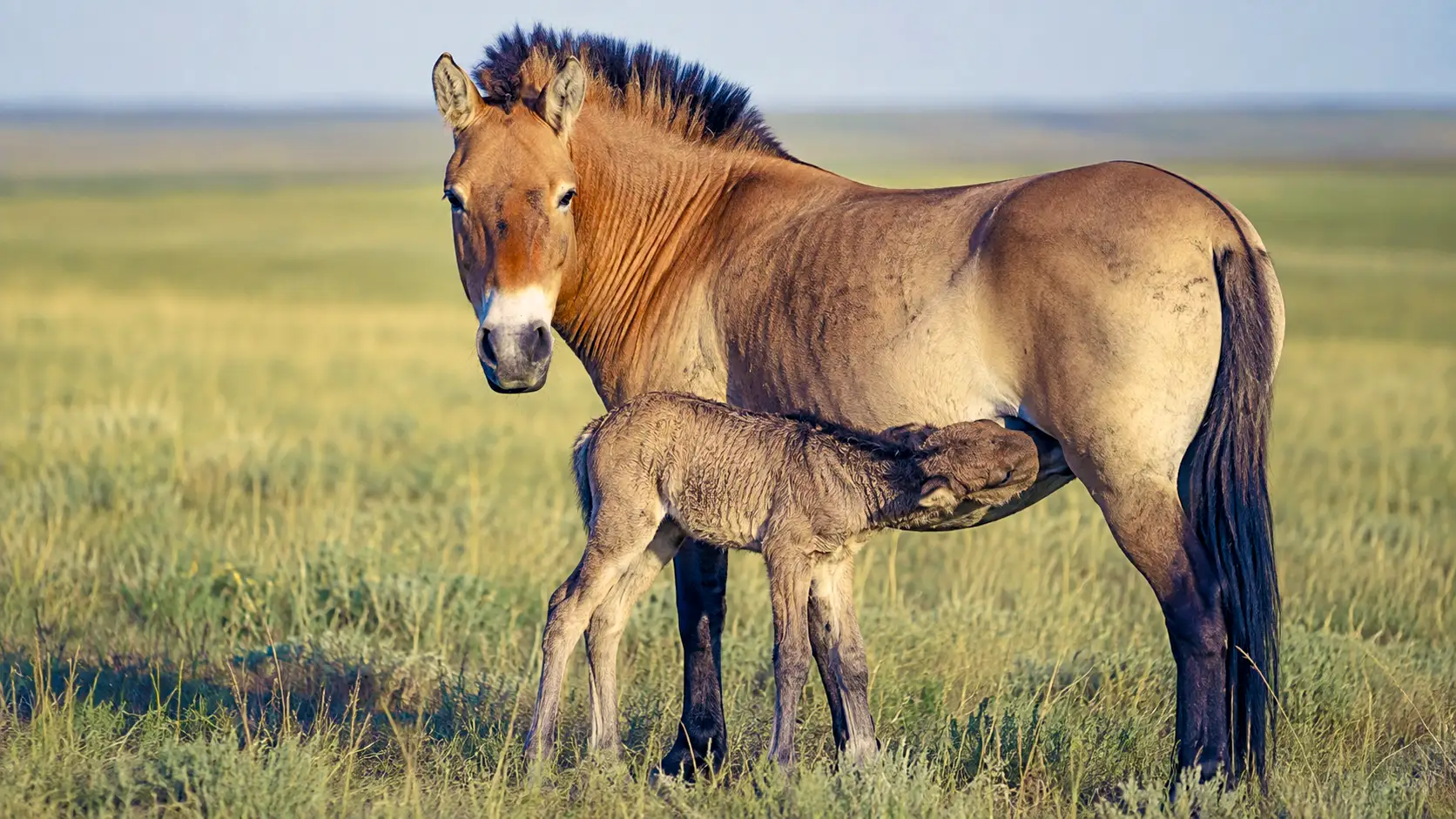
In a historic ecological revival, a wild horse foal has been born in the steppes of Kazakhstan, marking its first presence in these lands for over two centuries. This birth offers a glimmer of hope for the restoration of endangered wildlife in Central Asia.
Wild foal breathes life into the Altyn Dala plains after two centuries
The young male made his debut at the Altyn Dala State Nature Reserve, specifically at the Alibi reintroduction center located in the Kostanaï region. Local biologists are closely monitoring his lively first steps.
This successful birth encapsulates decades of dedicated conservation efforts for the Przewalski horse, the last wild horse species left on Earth, possessing a genetic heritage distinct from today’s domestic horses.
During the past century, hunting and habitat destruction had drastically reduced these herds across Eurasia. Last seen in the wild in the Gobi Desert around 1969, the species was preserved through careful breeding in European parks that managed to save a mere twelve ancestors.
Tessa and Zorro ensure genetic diversity through European zoo collaboration
The foal is a direct descendant of two horses transported from Europe in June 2024. His mother, Tessa, a seven-year-old female, came from the Tierpark in Berlin, while the father, Zorro, hails from Prague Zoo.
The foal quickly stood after birth and regularly nurses from his mother, exploring his acclimatization enclosure fearlessly. Vets confirm his remarkable adaptation ahead of the planned release.
International cooperation launches extensive program to restore populations in Central Asia
This birth is the culmination of a strong partnership between scientific and political institutions. The Kazakhstan Biodiversity Conservation Association leads the project, collaborating actively with Czech and German counterparts.
Mongolia had previously achieved a major reintroduction in the 1990s, and experts are now replicating this model to establish an autonomous population in Kazakhstan, which offers a sanctuary free from human activities.
The current plan includes the transfer of about forty animals over the coming years to protected pastures that boast water sources and are free from competing livestock. This ensures that foundation herds can thrive in an ideal environment.
Large herbivores regulate steppe vegetation and protect the region from fires
The return of this grazer significantly alters vegetation dynamics. By consuming tough grasses, these horses reduce combustible material on the ground, helping to limit the spread of steppe fires during the summer.
Additionally, their movement stimulates the regeneration of diverse plant life, cohabiting now with saiga antelopes and wild donkeys. Together, they reconstruct the guild of large herbivores in Eurasian plains.