
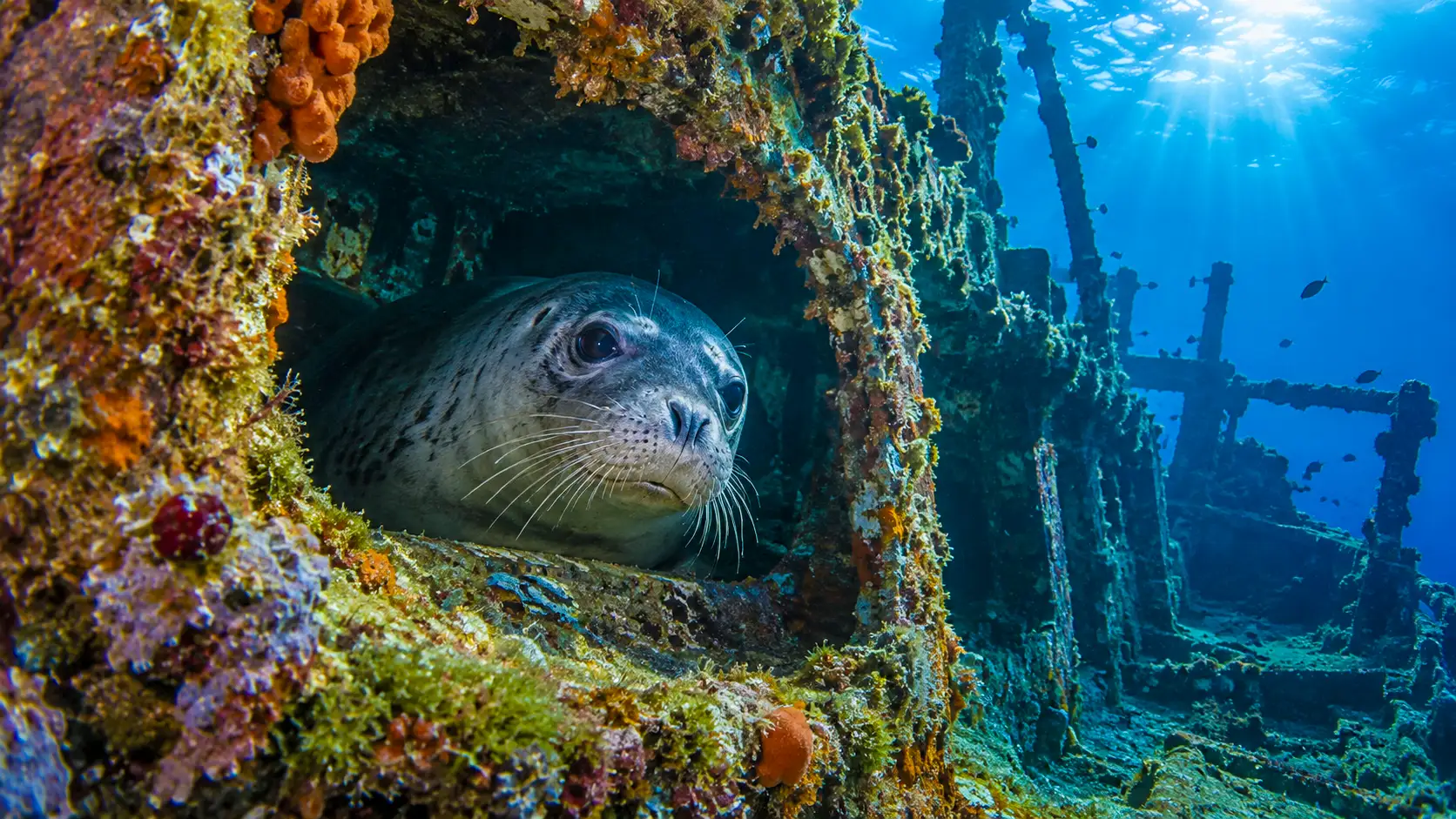
In the depths of the Adriatic Sea, remnants of a sunken hospital ship are fostering unexpected transformations in marine biodiversity.
A sunken Italian military ship transforms into a thriving underwater reef
The ship Po met its fate on March 14, 1941, when a British torpedo struck during the Italian-Greek war, sinking it off the Albanian coast. Since that day, it has rested at a depth of thirty-five meters in the bay of Vlora.
Over the years, nature has completely reclaimed the rusting vessel. A recent study published in Frontiers in Ocean Sustainability reveals that various colonies of sponges and algae now cover more than 80 percent of its metallic structure.
This industrial skeleton has become an artificial reef, fostering a diverse ecosystem. Invertebrates easily anchor to it, creating a sturdy habitat. Moreover, this underwater relief provides perfect shelter for passing coastal fish.
The unexpected return of the Mediterranean monk seal highlights the protective role of the steel carcass
Scientists have identified at least twenty-eight fish species around the wreck. Additionally, squids regularly use the walls as a nursery for their eggs. This underwater nursery naturally attracts marine predators searching for an easy meal.
A significant discovery was made in August 2023, when marine biologists spotted a Mediterranean monk seal resting in a cavity of the wreck. This marked the first confirmed sighting of this endangered mammal in the area since 1996.
The lionfish colonizes these warmer waters over a thousand kilometers from its original habitat
However, the refuge also draws unwelcome visitors, worrying environmental specialists. Between 2022 and 2024, researchers counted seven lionfish around the site, an invasive species previously found only in the Red Sea and the Indian Ocean.
This venomous fish is moving northward due to warming waters, with the Po wreck situated about 1,300 kilometers from its typical range. The metal wrecks apparently facilitate this advance, serving as stepping stones for invasive species.
Biologist Simone Modugno warns about the rapid proliferation of this venomous predator. She attributes the acceleration of this invasion to high salinity and marine heatwaves. A sudden increase in lionfish could threaten the local food chain within the next decade.
Artificial sanctuaries challenge ecosystem management amid rapid marine transformation
Scientific findings underscore the dual role of historic wrecks in the Adriatic Sea. On one hand, these structures provide protection for vulnerable marine animals against industrial fishing. On the other, they serve as perfect refuges for opportunistic tropical predators. This striking contrast has drawn the attention of biologists.
Managers of the Karaburun-Sazan reserve are now closely monitoring this data. Regular tracking of these reefs will help anticipate future marine imbalances, as marine conservation requires constant vigilance in the face of climatic changes.



