Imagine a future where building facades do more than shelter inhabitants -they clean the atmosphere too. In Zurich, researchers have developed a material filled with cyanobacteria that captures CO₂ and transforms it into stable minerals.
A hydrogel material housing ancient cyanobacteria
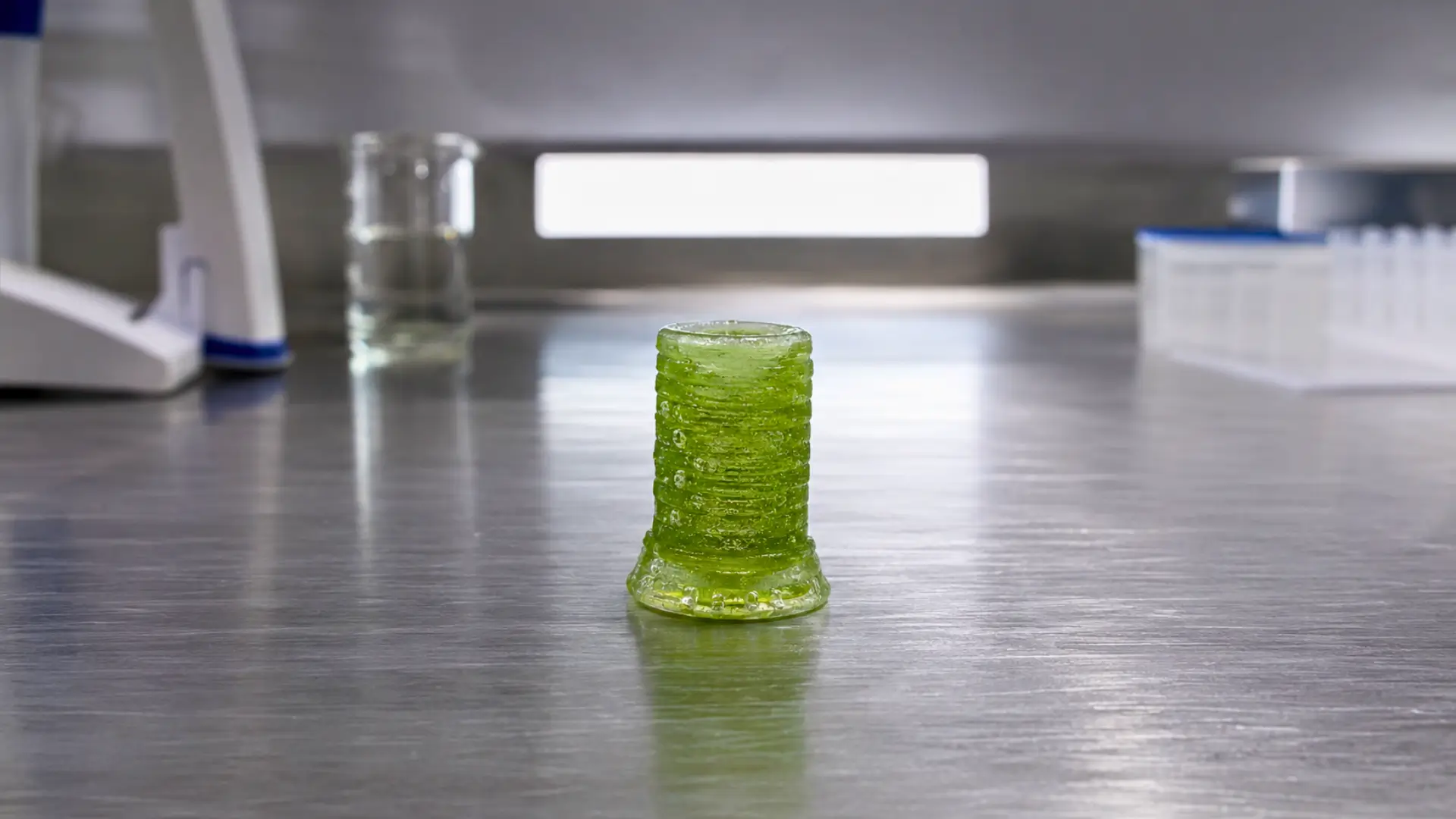
At first glance, this material appears to be an odd green paste from a futuristic lab. However, its biological engine is rooted in the origins of life. Cyanobacteria have existed for billions of years, using light to absorb carbon dioxide and produce the molecules necessary for their growth.
The team at ETH Zurich has embedded these microorganisms in a water-rich hydrogel. This structure allows light, CO₂, and nutrients to pass through, and the 3D printable matrix can take various shapes without suffocating the bacteria. The material is not just biosourced but also biologically active and capable of evolution.
Captured carbon is transformed into solid minerals
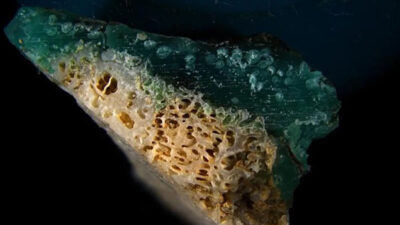
Through photosynthesis, cyanobacteria first integrate carbon into their biomass. However, researchers have discovered a second, even more surprising mechanism. These microorganisms alter their chemical environment, facilitating the formation of solid carbonates similar to those found in certain limestone rocks.
This dual capture changes the game significantly. Carbon stored in biomass can be released when the cells die or degrade. In contrast, when transformed into minerals, it becomes much more stable. It integrates directly into the structure of the material, gradually reinforcing it as if building its own skeleton.
The experiment lasted 400 days, which is remarkable for a living system in a laboratory setting. By the end of this period, each gram of hydrogel had sequestered about 26 milligrams of CO₂ in mineral form. Even when biological growth slows, the mineralization process continues to trap carbon.
Architecture in Venice demonstrates CO₂ capture potential
This research extended beyond confined samples. At the 2025 Venice Architecture Biennale, a group called Living Room showcased large, 3D-printed structures resembling sculptural tree trunks designed to expose cyanobacteria to light.
In this controlled environment, one of these columns absorbed up to 18 kilograms of CO₂ per year, equivalent to that absorbed by an adult pine tree. While this remains experimental, it highlights the potential of a material that can adapt to architectural scales. Buildings could thus become active players in the carbon cycle.
The most ambitious idea envisions using this material as an exterior cladding. The facade would evolve into a metabolic surface, gradually altering its appearance, hardening, and accumulating minerals over time. Architecture would no longer be static but would interact dynamically with its environment.
Promising living facades facing biological constraints
Despite its promise, several challenges hinder large-scale implementation. Cyanobacteria need continuous access to water, light, and nutrients. Variations in temperature, pollution, or frost can disrupt their activity. Assessing the overall impact of the material from production to maintenance is also essential.
Researchers are already exploring ways to enhance its robustness. They are adjusting the hydrogel composition and adapting the microorganisms involved. This approach does not replace the need to reduce emissions but could bolster CO₂ capture strategies through processes powered by solar energy.
What stands out most is the shift in perspective required. For a long time, buildings were designed as passive structures. In the future, some may grow, breathe, and mineralize carbon. One lingering question remains: how far are we willing to entrust living materials with the role of our cities?