
What if one of the best tools for repairing tropical forests was invented centuries ago? An experiment in the heart of the Amazon reveals how a handful of black soil can transform tree growth and their microscopic universe.
Terra preta: ancient soil enriched by human practices
At first glance, terra preta looks like a particularly dark soil. However, this black earth is much more than just fertile ground. It originates from practices developed by indigenous Amazonian populations, who gradually enriched the soil with charcoal, organic residues, bones, and pottery fragments.
This ancient mixture starkly contrasts with many tropical soils, which often lack nutrients despite the lush vegetation. The dark soil retains carbon and essential elements for plants much better. Most notably, it hosts an exceptional microbial community that can significantly influence root health and tree growth.
Impressive tree growth results in natural conditions
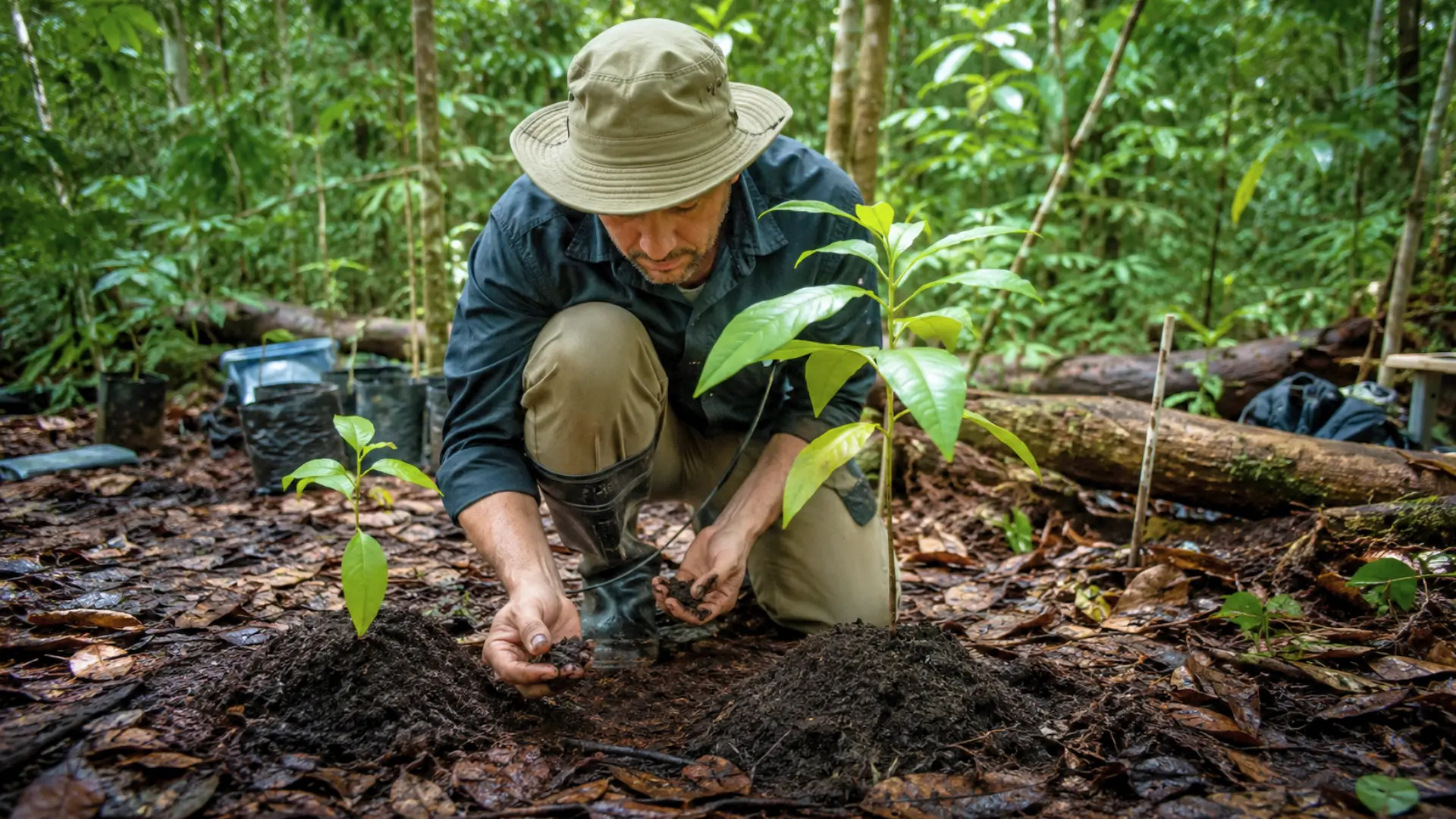
To examine this power outside the lab, Brazilian researchers conducted a field experiment between 2022 and 2023, with findings published in the scientific journal BMC Ecology and Evolution. Young trees received a small amount of terra preta before being transplanted into typical Amazonian soil, exposed to rain, wind, and natural variations.
After six months, the differences were striking. Young rosewood trees grown with this addition reached heights nearly 55 percent greater. Their trunks were up to 88 percent larger in diameter than the control plants, a decisive advantage for survival in degraded environments.
The paricá, another species used in certain reforestation programs, also showed positive results. Treated seedlings increased in height by about 20 percent, while their trunk diameter grew by over 15 percent. The benefits observed in the greenhouse easily held up in field conditions.
A transformed soil microbiome supporting plant health and resilience
Surprisingly, the benefits extended beyond mere nutrients. Through DNA sequencing of soil samples, scientists discovered that terra preta reshapes the soil microbiome. It altered the populations of fungi interacting with the roots, particularly affecting the rosewood.
Some potentially harmful communities diminished, while beneficial microorganisms increased. Terra preta functions as an invisible biological engineer; it not only nourishes the tree but also reorganizes its underground environment to facilitate nutrient absorption and bolster natural defenses.
However, extracting this soil on a large scale for distribution in deforested areas is impractical. The locations of terra preta contain remnants of pre-colonial societies and represent a protected archaeological heritage in Brazil. Their exploitation or transportation would threaten centuries-old historical records.
Towards biofertilizers inspired by terra preta for forest restoration
Researchers aim to take a more nuanced approach: identifying the fungi, bacteria, and other organisms responsible for the best results. These communities could be used to develop forest bio-inoculants, applied in minimal amounts to young plants before they are established in degraded lands.
While this method won’t instantly revive a vanished forest, it could enhance the survival chances of new plantings, speed up establishment, and reduce costly interventions. In reforestation programs covering thousands of hectares, just a few months of gained growth can profoundly influence the final outcome.
This discovery highlights that the Amazon is not merely an untouched wilderness. It also bears the marks of societies adept at transforming their environment with remarkable finesse. It raises the question: could the ecological technologies of tomorrow be inspired by careful study of ancient wisdom?



