What competition can turn extra pounds into a true survival feat? In Alaska, the Fat Bear Week invites the world to vote for the most impressive brown bears of Katmai just before they retreat into their dens to face winter.
Behind this quirky election, katmai’s bears are playing for winter survival
At first glance, the Fat Bear Week appears to be one of those eccentric trends that thrives online. Bears are photographed before and after summer and face off in a series of matchups where the public votes for their favorite. However, at Katmai National Park, gaining weight is anything but a game. The accumulated fat serves as a vital lifeline.
As winter approaches, brown bears typically head to their dens starting in October or November. For several months, they can go without food or water. During this time, their bodies rely on the reserves they built up over the summer. According to the National Park Service, some bears can lose up to one-third of their body mass during this remarkable phase of their biological cycle.
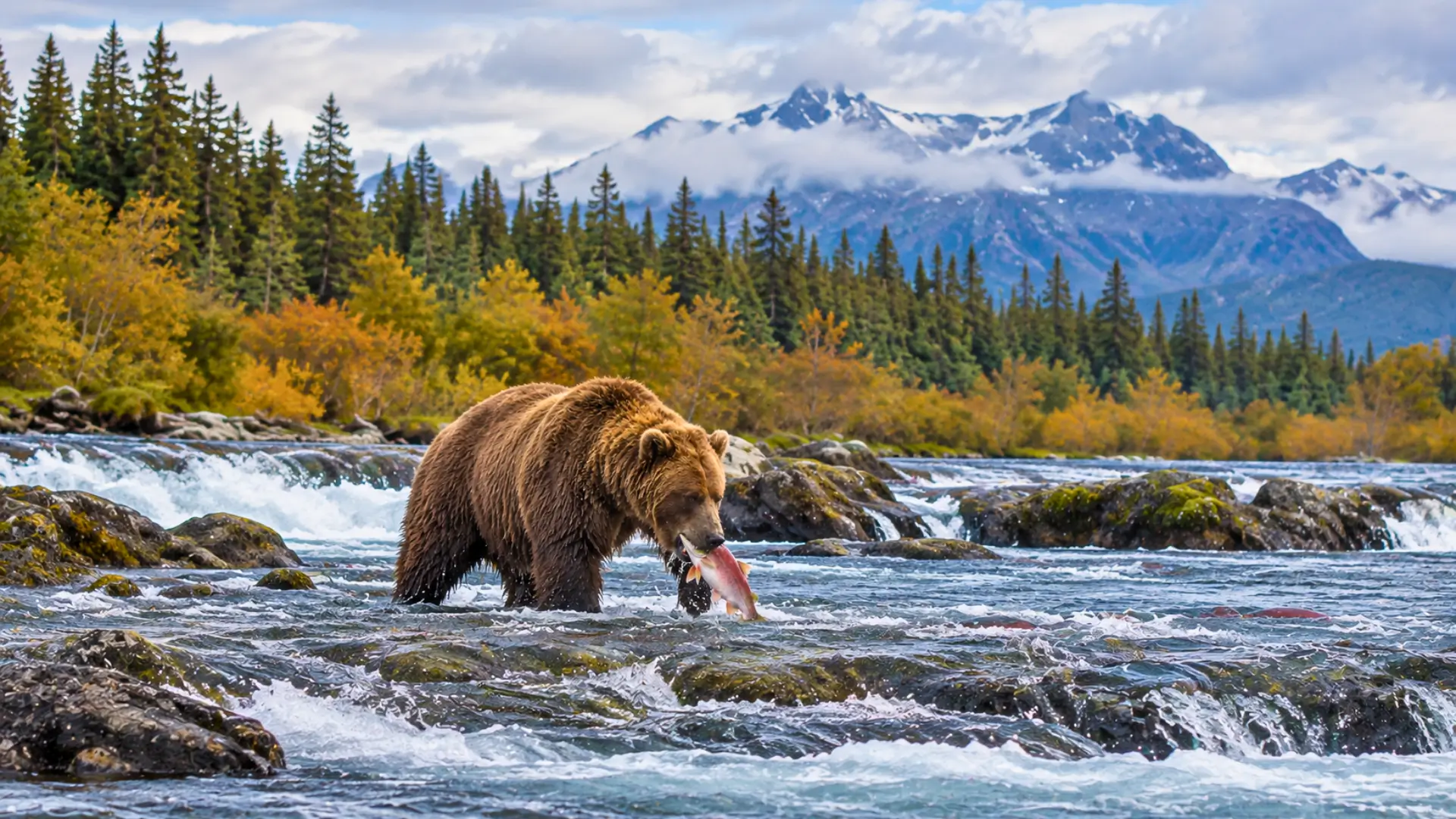
The key period happens during summer and early autumn. In Katmai, the salmon swimming up the Brooks River provide an extremely energy-rich feast. Bears often favor the skin, brain, and eggs, which are especially high in fat. This abundance allows the largest individuals to gain over a hundred pounds before winter sets in.
From a simple Facebook game to a phenomenon followed in over 100 countries
The story had humble beginnings in 2014. A park ranger noticed how a bear’s appearance changed between June and September. The team then created Fat Bear Tuesday. On this day, several photos were submitted for voting on Facebook. The response exceeded all expectations. The event quickly evolved into a full week of competition.
Fast forward twelve years, and the event is anything but trivial. For the 2026 edition of the Fat Bear Week, taking place from September 22 to 29, contenders advance through a bracket-style tournament. The previous year saw over 1.7 million votes from more than 100 countries. The bear known as 32, or Chunk, clinched the title.
Chunk falls in 2026, showing that the river always holds surprises
This year, Chunk came to the competition with a target on his back. The 2025 champion, having succeeded the well-known 128 Grazer, he dreamed of a repeat victory. However, Fat Bear Week loves to defy scripted outcomes. On September 24, 164 Bucky eliminated him with 118,731 votes against 46,053 for the defending champion.
The public’s judgment is based on more than just appearances. Comparative photos, biographies, and live cameras let viewers follow the bears around Brooks River. Since 2012, these images have revealed their fishing techniques, rivalries, and behaviors. Gradually, these numbered bears have transformed into familiar characters for online audiences.
This closeness accounts for part of the phenomenon. Watching a bear catch a salmon is spectacular in itself. But tracking the same bear for weeks tells a different story: a race against the clock. Behind every round belly lie thousands of calories that have been patiently stored away. These reserves must sustain the animal through a season when food becomes scarce.
Under the rounded bellies lies a precious ecosystem balance
The competition has a more serious goal than its playful name suggests. The National Park Service emphasizes that salmon are a keystone species in the Katmai ecosystem. Their abundance not only sustains the bears but also highlights the richness of the Bristol Bay watershed, which hosts significant wild populations of red salmon.
Ultimately, Fat Bear Week achieves an unusual feat. It makes the science of hibernation accessible through an almost sporting tournament. When the 2026 champion is crowned on September 29, one bear will earn a title. Yet a lingering question hovers over Brooks River: how long can this extraordinary natural feast remain so generous?