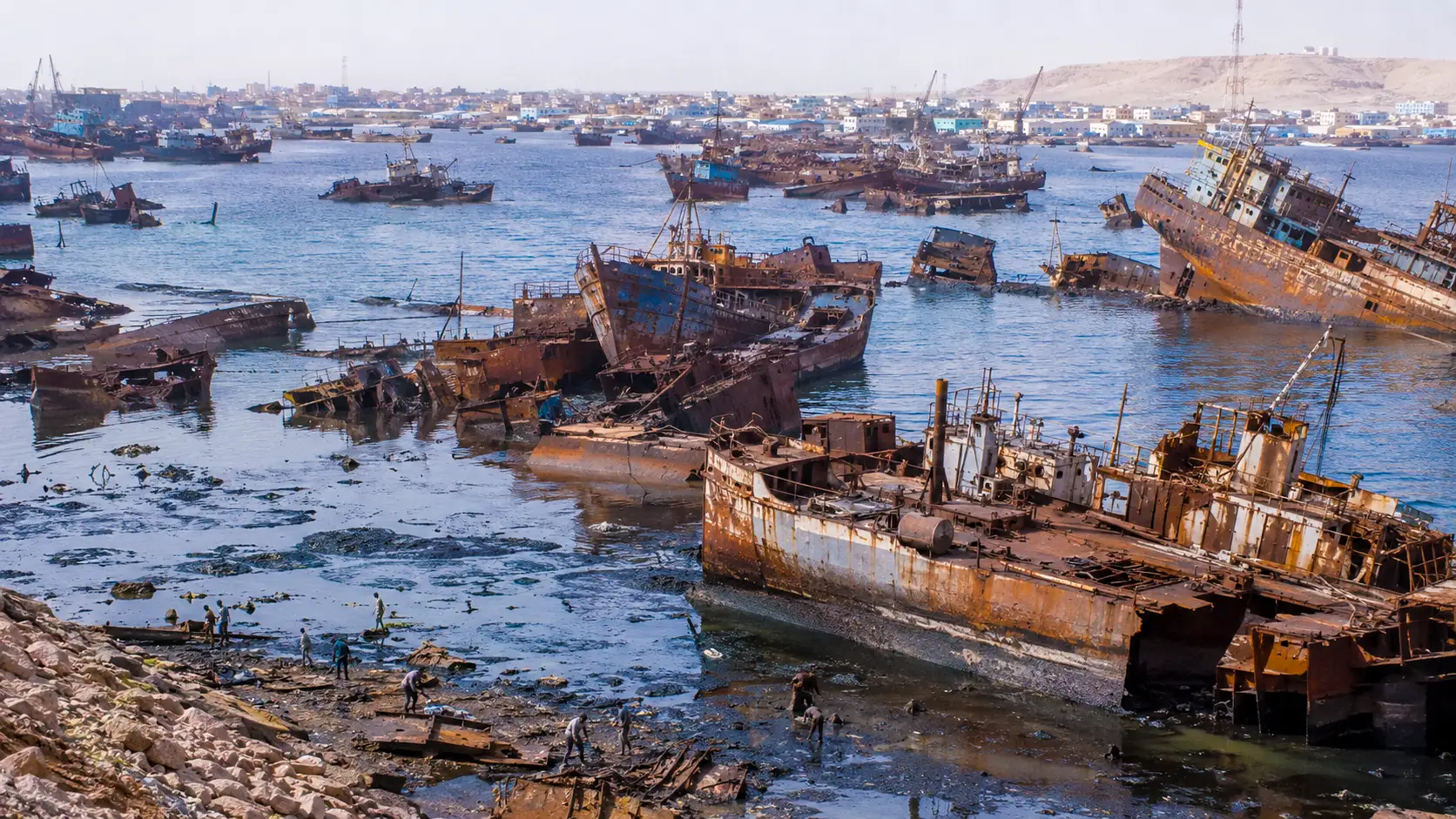
In the waters off Mauritania’s coast, a haunting graveyard of nearly three hundred shipwrecks has formed. These rusting hulks, abandoned by their owners to cut costs, pose a significant threat to local ecosystems.
The maritime graveyard near nouadhibou
In northern Mauritania, the bay presents a striking maritime scene. Worn fishing boats sit alongside massive cargo ships, their rusted steel frames jutting from the shallow waters near the city’s homes and port infrastructure. Experts now deem this location one of the largest maritime graveyards in the world, where a build-up of decaying ships creates an unusual coastal landscape.
Each vessel embodies a story of abandonment or economic failure. This site is a floating testament to global trade, where ships from far-flung origins come to end their journeys far from their original ports.
The rise of low-cost ship abandonment in Mauritania
Since the 1980s, the legal dismantling of ships has required costly towing and adherence to strict regulations. To avoid these significant expenses, many ship owners opted to pay a minimal local fee to leave their obsolete vessels to rot in the bay.
This lack of oversight, coupled with suspicion of corruption, solidified this informal economic model. The repeated instances of these maritime deposits have turned what was once a marginal practice into an extensive phenomenon, despite regular environmental warnings.
Toxic residues threaten local fishing while residents salvage abandoned metals
Over time, the disintegration of metal due to salt exposure releases harmful pollutants into the water. These leaks of hydrocarbons, heavy metals, and toxic paints degrade surrounding marine biodiversity, disrupting fishing activities along the coast.
Yet, an informal salvage industry has emerged around this maritime dump. Local residents cut scrap metal, salvage wires, and sell the recoverable materials to generate income for their livelihoods.
Thus, the community finds itself caught in a precarious balance. The same wrecks providing immediate financial resources are slowly undermining the fish stocks on which the entire community relies in the long term.
Cleanup efforts struggle against decades of pollution
To address the environmental issues, the Dutch company Mammoet Salvage has been commissioned to remove sixty priority structures. Their teams employ three heavy Hitachi ZX870-3 machines to cut down masses of steel weighing between 200 and 1,200 tons.
However, completely removing this debris remains a challenge due to ecological risks associated with cutting the ship hulls. Despite ongoing efforts to clean the coastline, the heavy industrial legacy is likely to loom over the Mauritanian port for years to come.