Orcas are known for their intelligence and complex social behaviors, and recent observations reveal a fascinating new technique involving their predation on sunfish.
Giant piñatas
Sunfish, particularly the giant sunfish (Mola mola), rank among the heaviest bony fish on the planet, occasionally exceeding weights of 2,700 kilograms. However, the star of this story, the lanceolate sunfish (Masturus lanceolatus), can reach weights of up to two tons, providing a substantial source of flesh.
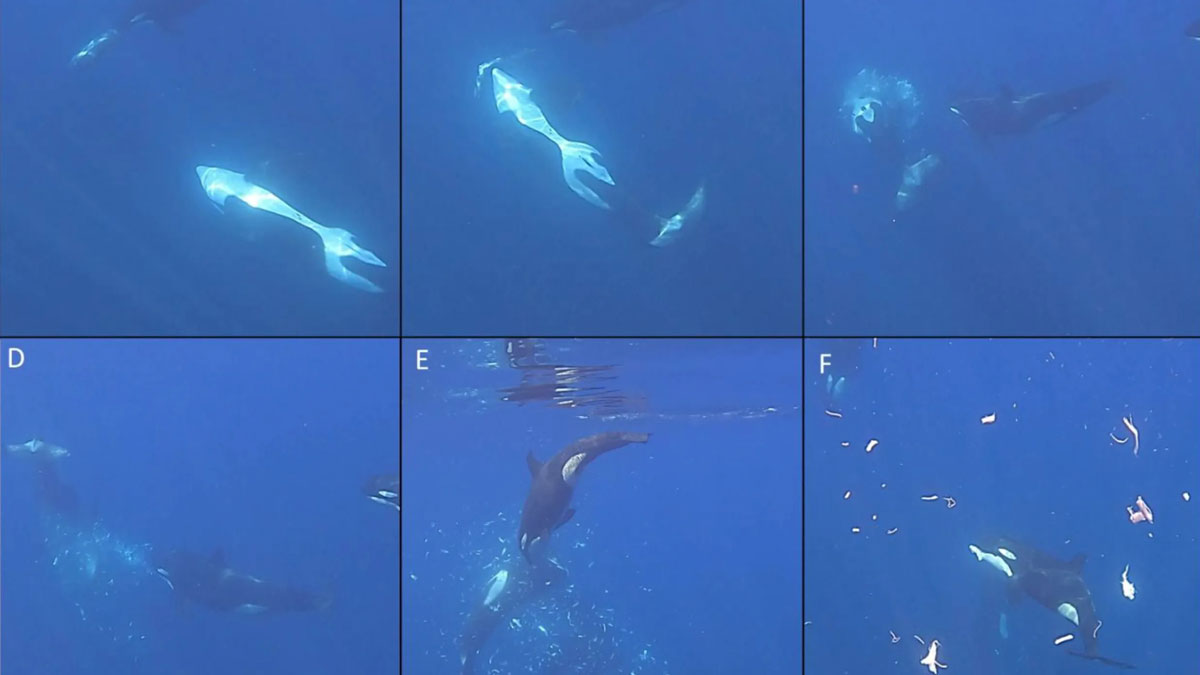
Captured in 2024 in the Gulf of California, initial footage shows an adult orca grasping a M. lanceolatus by its tail fin, releasing it just as another orca crashes into it at high speed, resulting in an explosive shower of flesh. In a spectacle reminiscent of using a piñata, the younger orcas eagerly dive into the smaller pieces, while the adults focus on the larger chunks.
This striking behavior was documented again a year later in the same waters, indicating that this may be a ritualized treatment of deceased prey rather than a novel method of hunting, as both instances involved fish that were already dead.
Morbid creativity
Researchers currently lean towards the idea that this behavior is a method of sharing food, albeit it is not entirely ruled out that it could also be a form of play. Kathryn Ayres, the lead author of the study published in Frontiers in Ethology, notes, “Orcas are known to play with their food. They are one of the most iconic marine predators, yet they continue to surprise us.”
The next steps for Ayres and her team involve determining whether this behavior is exhibited by a specific population of orcas and if it extends to other types of prey.
In past studies, researchers documented orcas employing tools, marking a significant moment in our understanding of their behavior, particularly during “underwater rubbing” sessions.