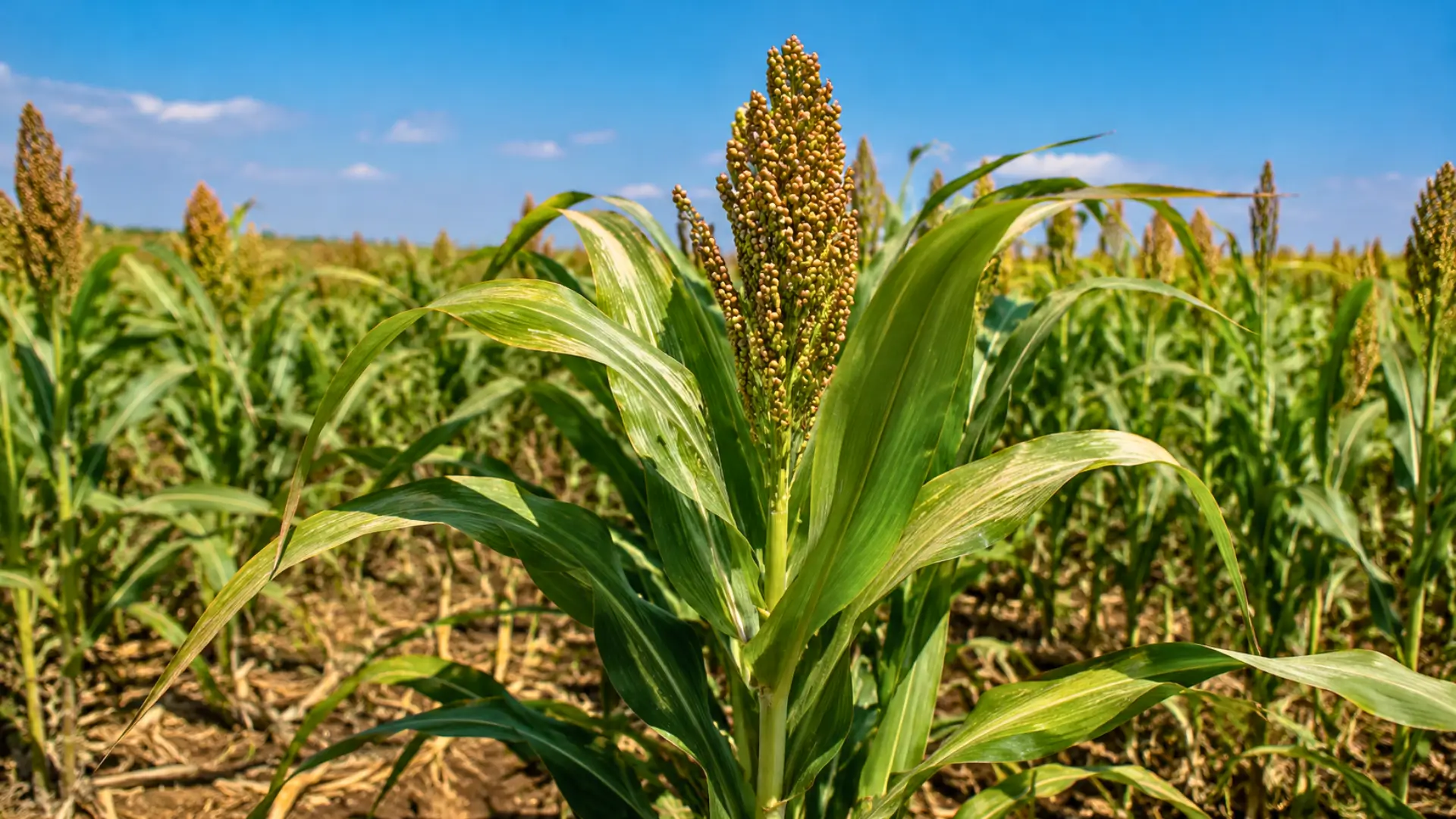
Under the blazing sun, some plants continue to produce sugars while losing significantly less water than their neighbors. Their secret lies in a remarkable variant of photosynthesis, evolved over time and now vital in the face of increasingly frequent droughts.
When heat turns regular photosynthesis into a trap for plants
At first glance, leaves might appear static and passive. However, they act like miniature chemical factories. Most plants, classified as C3, utilize an enzyme called RuBisCO to capture CO₂ for sugar production. When temperatures rise, this enzyme can sometimes misidentify oxygen instead. This misstep initiates a costly energy-consuming process known as photorespiration.
During drought conditions, plants need to conserve water to survive. They progressively close their stomata, the tiny pores on their leaves, limiting air circulation and reducing CO₂ availability. As a result, photorespiration increases, leading to a significant slowdown in sugar production right when plants require energy the most.
Some species have developed a microscopic carbon dioxide pump
C4 plants have devised an ingenious strategy to circumvent this dilemma. They first capture CO₂ using an initial enzyme and then transport it to specialized cells where it is concentrated. This biological carbon pump enhances the CO₂ around RuBisCO, effectively minimizing capture errors.
This process requires more energy than traditional photosynthesis, yet it becomes particularly beneficial under intense light and high temperatures. C3 plants struggle more under these conditions, while C4 plants can keep their stomata more closed and continue producing sugars. This adaptation significantly reduces their water loss through transpiration.
Researchers refer to this phenomenon as water-use efficiency, measuring the carbon produced relative to the water lost. C4 plants often achieve better results, although this advantage varies depending on species, soil conditions, and local climate. The system is therefore more complex than it may seem.
Corn, sorghum, and sugarcane hide this astonishing mechanism in their leaves
This strategy is not insignificant in the plant world. It can be found in major crops like corn, sorghum, millet, and sugarcane. These crops thrive in many tropical and subtropical regions, achieving agricultural success partly due to their more efficient photosynthesis under intense heat and sunlight.
Sorghum is of particular interest to agronomic researchers. Recent studies show that it performs better than corn in certain arid or semi-arid areas. However, this advantage also depends on several factors such as soil quality, root depth, and rainfall distribution.
The C4 mechanism resembles a future weapon, but it also has a vulnerability
Reducing the opening of stomata helps conserve water, but it also limits the plant’s natural cooling. Transpiration acts as a form of plant air conditioning. Without it, leaf temperatures can rise rapidly during heat waves, creating additional stress. Recent research confirms that responses to water stress vary among species.
A 2026 study in Scientific Reports indicated that the C4 metabolism offers advantages, but it does not guarantee complete resistance. Extreme conditions, especially when heat and drought overlap, remain challenging for these plants. Another paradox is that an increase in atmospheric CO₂ benefits C3 plants more than C4 plants. The latter already concentrates this gas.
On the other hand, a more significant closure of stomata might enhance their water efficiency. However, this balance remains fragile and highly dependent on environmental conditions. Therefore, agricultural research is exploring hybrid solutions for the future, combining optimized photosynthesis, deeper roots, and better water management. In a hotter and drier climate, these invisible mechanisms within the leaves could become crucial for global food security.