The story of reindeer on St. Matthew Island is a striking example of how populations can grow unchecked before facing catastrophic collapse.
In 1944, American coast guards release 29 reindeer on an isolated island in the bering sea
In August 1944, amid World War II, American coast guards set up a radio station on St. Matthew Island in Alaska, housing nineteen men to operate it. This remote spot is one of the most isolated locations in the United States.
As a precaution against food shortages, the military transports 29 reindeer from Nunivak Island. They travel over 200 miles by barge to St. Matthew, intended to serve as a living meat reserve. However, no one could foresee what awaited these animals in a predator-free environment rich in lichen.
From 29 to 6,000 in less than twenty years, the reindeer population flourishes without predators
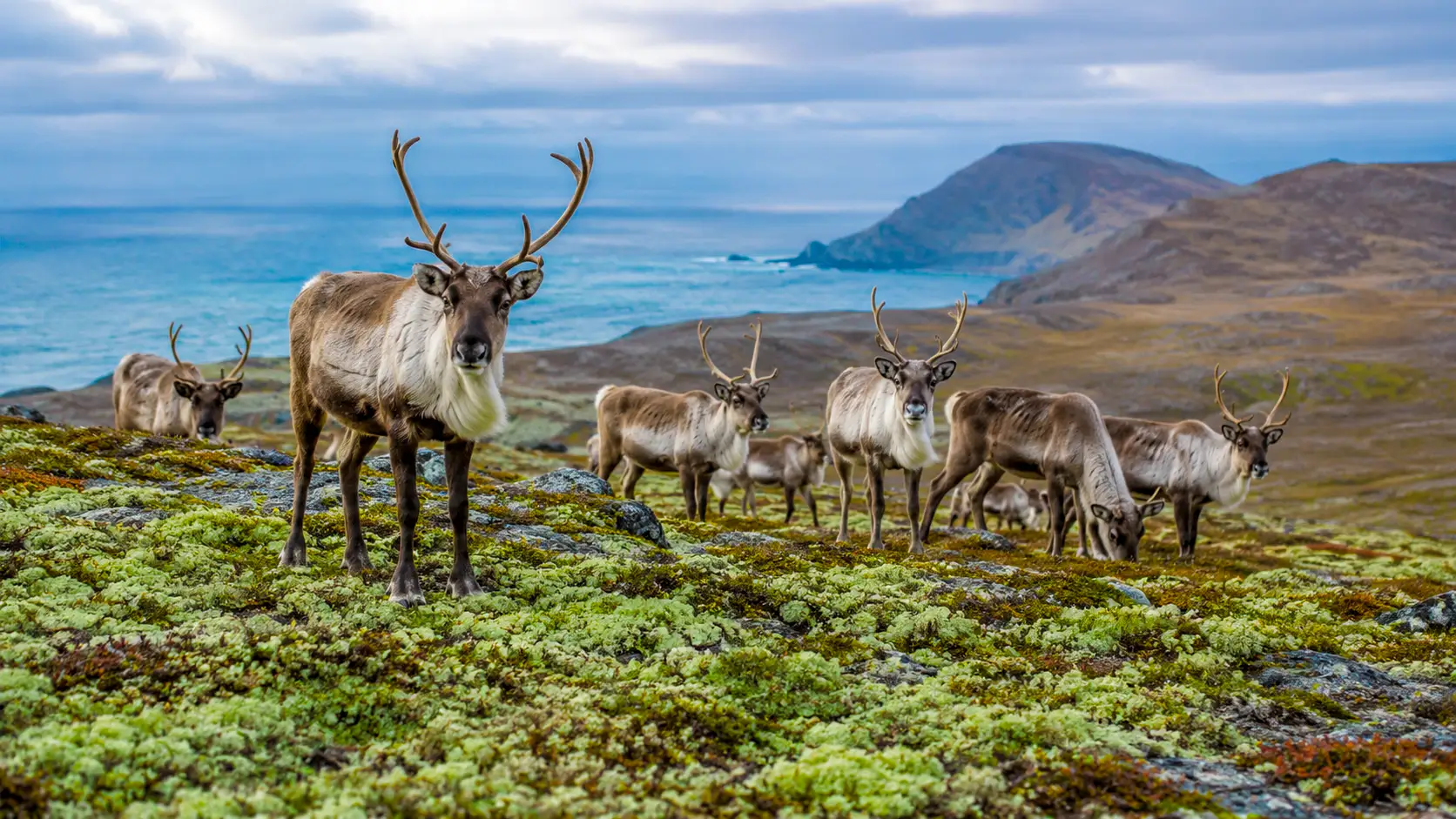
Thirteen years later, biologist David Klein arrives on the island and discovers 1,350 reindeer, a remarkable increase from the original 29. These reindeer appear exceptionally healthy, even heavier than domesticated reindeer by 24 to 61 percent, depending on sex.
Klein notes localized overgrazing but expresses no alarm. A thriving herd, limited resources, and the absence of predators create an extreme situation. This dynamic becomes more pronounced just six years later.
By 1963, Klein returns with other scientists to find the population has escalated to 6,000, or 47 reindeer per square kilometer. However, average body size has declined since 1957, and the ratio of young to adults has noticeably decreased.
In just a few months, the herd of 6,000 plummets to 42 survivors with no fawns left
Due to transport issues, Klein cannot revisit the island until 1966. Coast guards have already reported seeing bleached skeletons dotting the tundra. When Klein and a team of scientists check the island, they find only 42 living reindeer, with none of them being fawns.
Over the span of a few winter months, the population collapses by 99 percent. This is not a gradual decline over several seasons but a sudden biological crash. Neither hunting nor natural predators can explain such a rapid decline.
Recent scientific reassessments attribute the reindeer collapse to an extreme winter rather than just starvation
For a long time, the prevailing narrative focused solely on overexploitation of lichen. However, a reevaluation by Frank Miller published in the journal Rangifer offers a more nuanced perspective. The herd maintained an annual growth rate of 1.32 for nineteen years, with most mortality occurring during the harsh winter of 1963-1964.
David Klein later shares these insights with climatologists Martha Shulski and John Walsh. Together, they reconstruct the weather conditions of that brutal winter. Data from nearby islands reveal extreme cold and heavy snowfall, leading to a hard snow layer that obstructed the reindeer’s access to remaining lichen.
With only one fertile female and a likely sterile male, the possibility of reproduction vanishes. The reindeer of St. Matthew eventually disappear in the 1980s. This case, known as overshoot and collapse, continues to inform ecological studies, reminding us that fleeting triumph can precede silent disaster.