
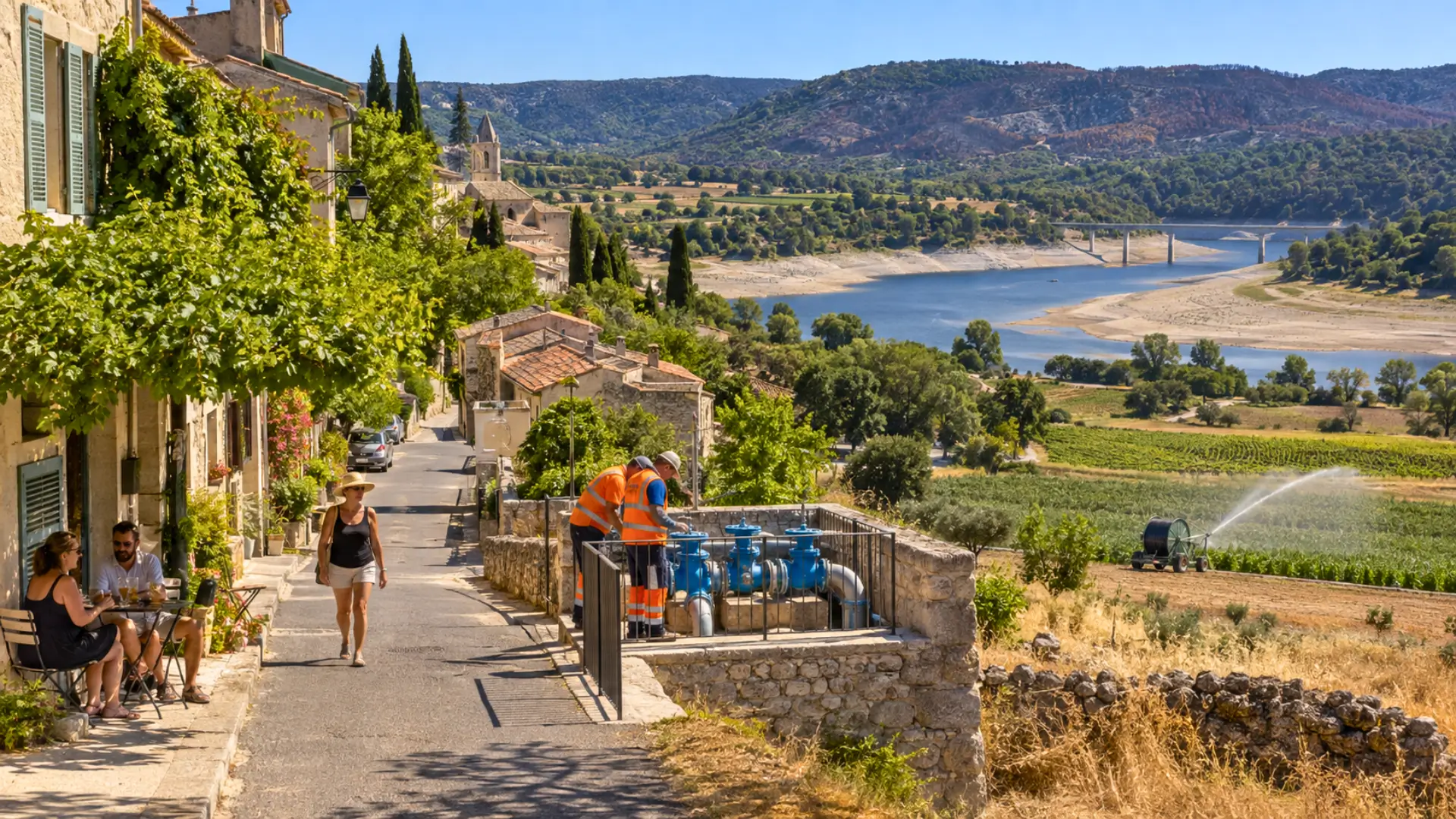
What if the climate of France tomorrow requires significant changes across the country? After the record-breaking summer of 2026, which was the hottest since records began in 1900, an official report outlines a vision where water, agriculture, cities, infrastructure, and insurance must adapt far more rapidly than anticipated.
The summer of 2026 reveals the climate-driven future of France
The summer of 2026 has delivered a stark warning about the realities of climate change. With an average temperature of 24 °C, it has become the hottest summer ever recorded in France since measurements began in 1900. Moreover, Météo-France reported 53 days of heatwaves, while the rainfall deficit climbed to nearly 40 percent.
This landscape of parched soil and increasing wildfires is no longer seen as an isolated anomaly. The High Commission for Strategy and Planning warns that infrastructure designed for previous climate conditions may no longer suffice. Roads, housing, water networks, and agricultural practices are all under threat, demanding a nationwide adaptation effort.
An energy transition faces a broader challenge
For years, the narrative around climate change has centered on carbon emissions. However, the new report shifts the focus. Reducing carbon alone will not be enough if areas remain vulnerable to droughts, heatwaves, and floods. The country must also learn to function in a fundamentally altered climate.
This perspective aligns with the third National Climate Change Adaptation Plan. Its ambitious goal is to prepare France for an increase of approximately 4 °C by 2100 compared to pre-industrial levels. To achieve this, the program includes 52 measures and over 200 actions relating to buildings, biodiversity, businesses, and territorial management.
The implications extend beyond mere weather patterns. A France reliant on fossil fuels, specific materials, and imported agricultural inputs remains susceptible to external crises. Therefore, the High Commission connects climate adaptation to national sovereignty, advocating for enhanced electrification, strengthened industrial sectors, and a more self-sufficient agricultural system.
Water and agriculture as laboratories for a new France
In rural areas, adaptation may transform familiar landscapes. In the future, crops, farming calendars, irrigation methods, and input usage will need to adjust to hotter and drier conditions. It is not merely about preserving yields; it is crucial to ensure food production remains stable despite diminishing resources.
Water becomes a central issue, especially when a previously abundant resource becomes scarce for months. Decisions about prioritizing water allocation must be made politically. Who gets what? Which crops should be preserved? Where should new infrastructure be developed? In the absence of common guidelines, there is a risk of a fragmented response across regions.
Who bears the costs of adaptation?
The expenses associated with refreshing schools, reinforcing levees, or modernizing water networks can be substantial. In response, the High Commission proposes supporting select communities. Those with credible plans may gain access to low-interest funding, allowing adaptation costs to integrate into municipal budgets.
A subtle yet significant shift involves insurance. Increasingly common events like wildfires, droughts, and flooding could compromise the current model. To mitigate these risks, the report suggests expanding public reinsurance, a move that would help pool risks and protect the most vulnerable areas.
Behind these technical measures lies a profound question: what does a country adapted to an unprecedented climate look like? By 2050, the answer may emerge in cities and fields where shaded streets, new crops, resilient homes, and precious water resources may characterize a transformed France.



