
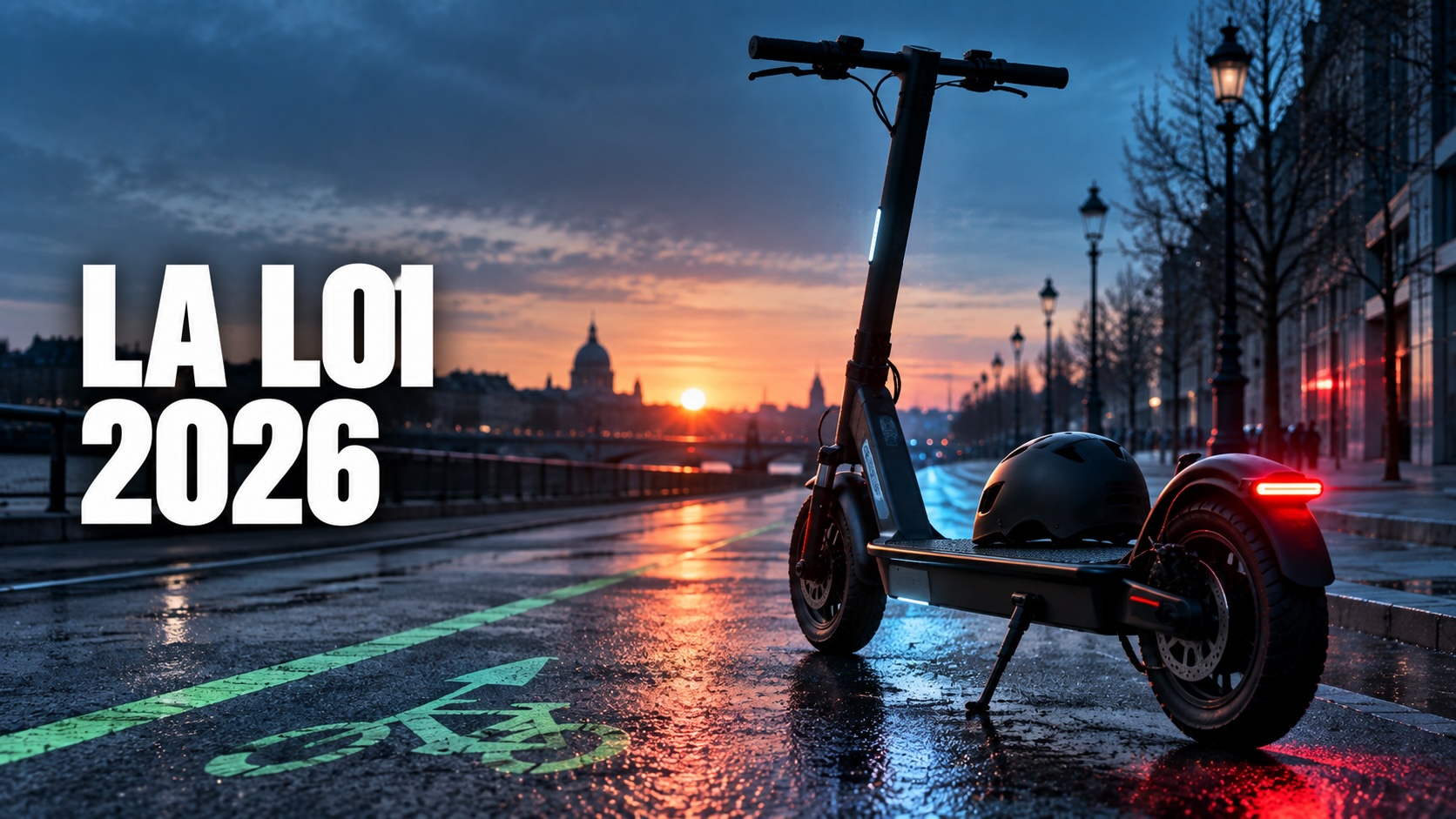
Many are unaware of the actual laws governing electric scooters in France, especially concerning helmet requirements. Let’s explore what the current regulations really are and what you need to know to stay compliant.
The legal foundation for electric scooters was established by decree number 2019-1082 on October 23, 2019. This legislation introduced the category of motorized personal transportation devices, which includes electric scooters, electric unicycles, hoverboards, and gyropodes, and incorporated them into the road code.
Since then, three amendments have been made. The decree of January 14, 2022, added electric balance bikes to this category. On March 15, 2024, it became legal for electric scooter users to ride on bike lanes marked by sign M12. The November 2024 decree permitted stop lights and turn signals, allowed for two riders side by side on greenway paths, and prohibited flashing rear lights. None of these amendments affected helmet laws, which we routinely verify during our scooter tests.
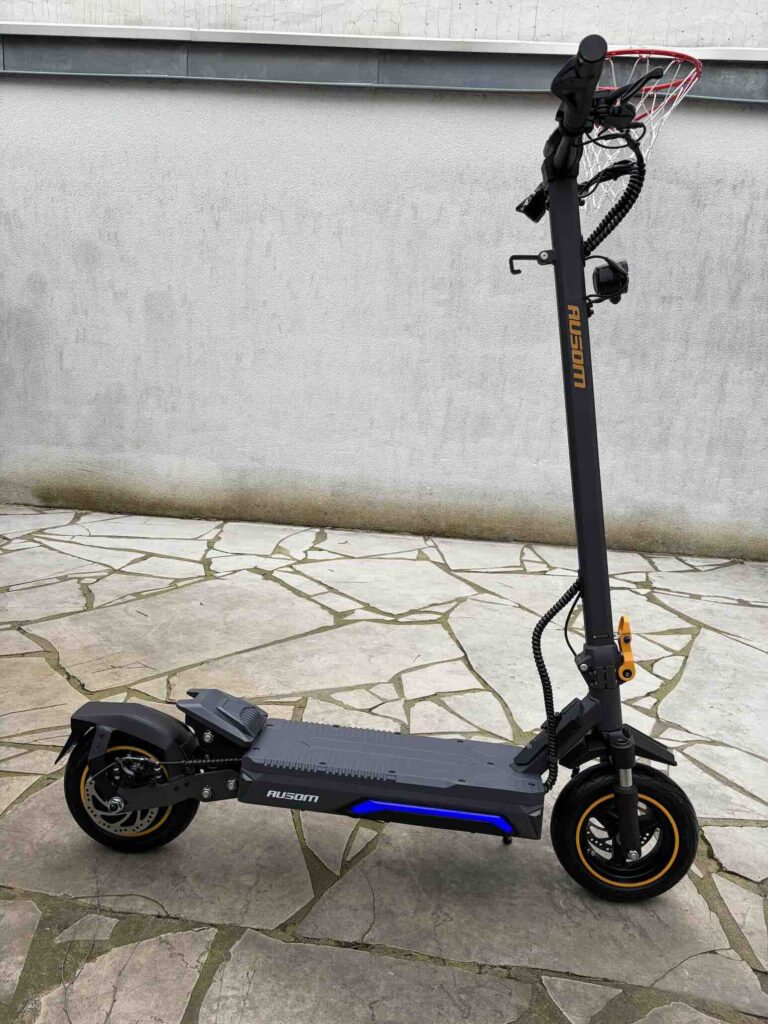
For several years, we have tested these vehicles under real-world conditions, from the KuKirin G2 Max to the Ausom K20 Pro, and bicycle models in our electric bike comparisons. This article aims to fill in the legal framework in which these devices operate, providing clarity and reliability rather than recycling retailer information.
The current rules for EDPMs
| Rule | What the road code states | Penalty |
|---|---|---|
| Minimum age | 14 years old since September 1, 2023 (previously 12) | Fine, legal representative is responsible |
| Maximum speed | 25 km/h, mandatory manufacturing limit | 1,500 € for tampering |
| Where to ride in urban areas | Bike lane or road if none exists, limited to 50 km/h | 35 € |
| Sidewalk | Prohibited, except for local exceptions and maximum 6 km/h | 135 € |
| Outside urban areas | Only greenways and bike paths allowed, roads prohibited | 35 € |
| Passenger | Prohibited, one person only | 135 € |
| Headphones | Prohibited while riding | 135 € |
| Device equipment | Horn, effective brakes, front and rear lights, reflective devices | Varies based on violation |
| Helmet | Mandatory outside urban areas, day and night. Recommended only in cities | Fine outside urban areas |
| Reflective vest or equipment | Mandatory outside urban areas, and at night or visibility is poor in cities | Fine |
| Liability insurance | Mandatory, without exception | 500 € flat rate, up to 3,750 € |
A note on reading this table. The penalties themselves may not be the most crucial aspect, which many articles neglect. What really stands out are the two bolded lines at the bottom: tampering and insurance. These hold a different significance than the rest and can result in costs exponentially larger than a fine.
Understanding the helmet law
Returning to the original point, a legislative proposal aimed at tightening electric scooter regulations was submitted to the National Assembly on June 9, 2026, under number 2900 and was assigned to the law commission. This proposal includes a provision to make helmet use mandatory. As of this writing, it has not been discussed in session, has not passed through the Senate, and thus is not law.
Nonetheless, several brands and retailers falsely claim that this obligation is in effect, often citing potential fines as evidence. This misinformation spreads quickly because it seems plausible: the measure has been debated for years and will likely pass in the future.
The real existing regulation is different and much older. Outside urban areas, wearing a helmet is mandatory for all EDPM operators, both day and night, along with reflective equipment. In urban settings, wearing a helmet is merely recommended unless specified by municipal law, with some cities, like Nice, imposing stricter rules.
The practical implication is somewhat absurd. A ten-kilometer commute that exits the municipality legally requires a helmet; yet the same entirely urban route does not, despite cities being where most accidents occur. This inconsistency likely fuels the push for changes in the law.
Insurance: the real risk is not what you think
This part of the article warrants special attention, even for those already knowledgeable about the topic. Liability insurance has been mandatory since 2019 for all motorized scooters, regardless of speed or whether they are new or used. Riding without insurance is considered a criminal offense under Article L324-2 of the road code, not just a simple infraction.
The flat-rate fine for riding uninsured is 500 €, reduced to 400 € if paid within fifteen days, increased to 1,000 € after forty-five days, and can reach up to 3,750 € in court due to repeated offenses or challenges, with possible confiscation of the vehicle.
However, the true risk lies elsewhere. If you injure someone while uninsured, the Guarantee Fund compensates the victim on your behalf, according to the principle of bodily injury restitution. They will, however, seek to reclaim every euro from you, including management fees. This claim has no limit and can include wages and assets, extending over several years.
To put this into perspective, in 2025, this fund paid out over 132 million euros to approximately 7,500 victims of accidents caused by uninsured drivers across all types of vehicles. A complex fracture with lasting effects can cost tens of thousands of euros; severe bodily injury can far exceed an individual’s entire assets.
A critical point that many overlook: home insurance rarely covers this. Multi-risk insurance policies generally exclude liability related to operating a motorized land vehicle, and an EDPM falls into this category by law. It is imperative to review your contract rather than make assumptions; this five-minute check is the sole advice in this article that could protect you from financial disaster.
Tampering: the most expensive mistake
Riding a device that exceeds 25 km/h can lead to a 1,500 € fine. The amount may surprise, but it is justified: beyond this limit, the device is no longer classified as an EDPM under the road code. It becomes categorized as a motorized vehicle, triggering all corresponding obligations, including registration, specific insurance, and licensing, none of which may be fulfilled.
This creates two consequences that are significantly heavier than the fine. Your EDPM insurance, if you have it, will no longer cover anything: it insures a compliant vehicle, not a reclassified one. Additionally, in the event of an accident, legal responsibility changes nature.
This nuance is essential on the market. Many online models advertise speeds of 40, 50, or 60 km/h. They are legal for sale and permitted on private property or race tracks; however, they are not legal on public roads unless they are restricted to 25 km/h. Reputable manufacturers typically deliver their products with the road mode activated by default. We routinely verify this in our tests.
Electric bike: everything hinges on 250 watts
The framework here is more straightforward and relies on three cumulative criteria. A compliant electric bike must have a motor with a maximum output of 250 watts, assistance that cuts off at 25 km/h, and a motor that only activates when pedaling. Meet these three criteria, and you are cycling: no registration, no license, no specific insurance required, with access to bike lanes. The European standard EN 15194 additionally regulates electrical safety, batteries, and chargers.
Failing any one of these criteria changes everything. A more powerful motor, assistance that goes up to 45 km/h, or a throttle that allows acceleration without pedaling reclassifies the device as an L1e-B moped. This reclassification incurs the need for a registration card, a license plate, moped insurance, an ECE-approved helmet, certified gloves, and an AM license, along with a ban from bike paths unless otherwise indicated. Fines for non-compliance can reach 750 €.
This boundary tends to catch many buyers off guard, especially with fat bikes and imported models. A bike marketed as “750 W” or “45 km/h” is not legally considered a bike in France, even if labeled and designed to look like one. We have validated this with various models, from the Fiido T2 cargo to the DYU C1. Brands distributed in Europe typically deliver compliant configurations, but access to unrestricted modes is often buried in the manual.
What product descriptions never mention
Three major blind spots appear in tests, none of which are addressed in technical specifications.
The first is legal compliance. A compliant scooter must have a horn, permanent front and rear lights, and reflective devices. Many entry-level models are shipped without a proper rear light, sometimes just a positional LED that does not suffice. This could result in unforeseen violations.
The second issue relates to restrictions. Some models are software-restricted and can be tampered with through button sequences described on forums, while others are hardware-restricted. Legally, this distinction doesn’t exist: only the observed speed matters. For buyers, however, this difference can greatly affect usability since unintentional tampering is easy to fall into.
The third factor is the battery. CE marking, compliance with EN 15194 for bikes, and traceability of cells are not mere details; they are vital indicators distinguishing a quality battery from a reconditioned pack. This also determines whether your insurer will assist in battery-related incidents.
Impact based on your usage
Daily urban commute entirely in the city. Insurance is mandatory, helmets are recommended but not required, bike paths are prioritized, sidewalks are off-limits. The first check should be your insurance contract: it’s the only truly asymmetrical financial risk in your cycling habits.
Mixed route of city and outskirts. The moment you exit the municipality, a helmet and reflective gear become mandatory, and you can no longer use regular roads: only greenways and bike paths are permitted. This is the scenario most often breached without awareness, as municipal boundaries are not always visible.
Powerful model for recreational use. A scooter rated for 60 km/h remains legal to own. It must be limited to 25 km/h on public roads. Tampering transforms a potential infraction into a criminal offense without insurance coverage. The calculations are clear.
Imported electric bicycle or fat bike. Always verify the three criteria before a purchase: 250 W, cut-off at 25 km/h, and pedaling-only assistance. Any model failing one of these factors will classify you under moped regulations that were never disclosed at the time of purchase.
European mobility week and what it doesn’t change
The 25th edition runs from September 16 to 22. It features activities, equipment availability, sometimes free repair workshops, and anti-theft marking organized by local authorities. Check your municipality’s program; there are often tangible benefits available.
However, what it doesn’t change is the legal landscape. No new regulations will take effect during this time, and the rules outlined above will remain unchanged on September 23. Any upcoming changes in 2026 or 2027 will come from the legislative proposal number 2900 and will require a vote, not through a themed week.
Frequently asked questions
Is a helmet mandatory for electric scooters in 2026?
Yes, outside urban areas both day and night. In urban areas, it is recommended but not mandatory unless specified by local ordinances. The bill aimed at generalizing this requirement was submitted on June 9, 2026, and has not yet passed. Pages claiming a general obligation are inaccurate.
What is the minimum age to ride an electric scooter?
14 years old since September 1, 2023, previously 12 years. No license is required. The legal representative is responsible for a minor, including in terms of insurance and compensating a victim.
What is the fine for an unregulated scooter?
1,500 €. If it runs over 25 km/h, the device is no longer classified as an EDPM but a non-compliant motor vehicle with no registration or insurance for that use. Your EDPM insurance coverage ceases, which represents the most significant consequence.
Does home insurance cover an electric scooter?
Almost never. Multi-risk home insurance policies typically exclude liability related to operating a land motor vehicle, which includes any EDPM. Specific insurance is required. Always check your contract for exclusions rather than assume coverage.
What are the risks of an accident without insurance?
The Guarantee Fund compensates the victim and then turns to the driver to recover the amounts paid, with no ceiling on recovery, affecting income and assets for years. In 2025, the fund paid out over 132 million euros to around 7,500 victims across all vehicles.
Is a 750 W electric bike legal in France?
No, not as a bike. Beyond 250 W, with assistance cut at 25 km/h and a motor that starts only when pedaling, the device becomes a moped L1e-B: registration card, license plate, insurance, approved helmet, certified gloves, and AM license become mandatory, and access to bike paths is prohibited.
Conclusion
The legal framework for EDPMs has been stable since 2019, with only minor adjustments from 2022, 2024, and 2026 affecting margins. What changes annually is not the law itself, but the chatter surrounding it: each year, a new proposed obligation is reported as if already in place, while the actual, existing regulations often go unnoticed.
If you take away only two things from this article, let them be these. First, review your insurance coverage, for this is the one area where a misunderstanding results in debt rather than a simple fine. Second, avoid tampering with speed limits as any increase in velocity could mean sacrificing protective coverage at a crucial moment.
The rest falls within sound regulatory judgment: use bike paths if available, do not ride on sidewalks, do not carry a passenger or use headphones, and always wear a helmet outside city limits. Ideally, this last rule would align with the reality of accident occurrences, but it does not, likely leading to eventual changes.



