A river rerouted, a lagoon transformed, and six decades of ecological consequences: beneath the calm waters of Étang de Berre lies a grand experiment. How has a hydroelectric facility built in 1966 been able to permanently alter an entire Mediterranean ecosystem?
In 1966, the Durance river suddenly took an unexpected route
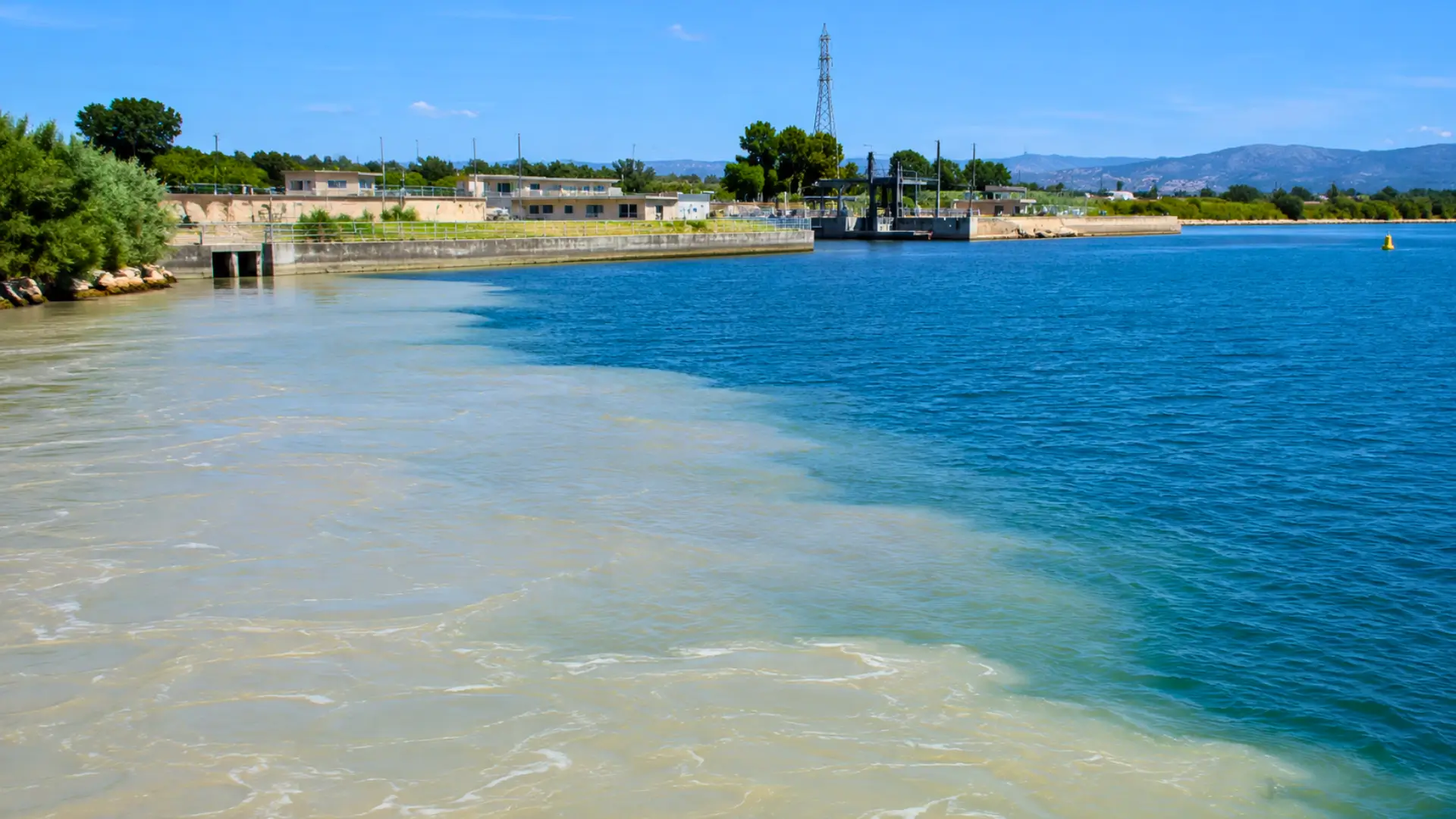
At first glance, Étang de Berre appears to be a vast inland sea in Provence. However, its dynamics changed dramatically in 1966 when the hydroelectric plant in Saint-Chamas began operations. From that point on, the EDF canal began channeling fresh water from the Durance River, altering the lagoon’s natural balance.
This shift was swift and profound. The saltwater lagoon was now receiving hundreds of millions of cubic meters of freshwater, leading to changes that continue today as annual discharges can reach 1.2 billion cubic meters, carrying silt from the Durance.
Fishermen and europe impose limits on discharges
While the surface changes remained subtle, the ecosystem beneath experienced deep transformations. The less dense freshwater lingered at the top, while the heavier saltwater sank below, creating a stratification of the water column that severely restricted vertical exchanges.
This persistent separation had dire consequences. Over time, the seabed became hypoxic as oxygen could no longer circulate effectively. By 2018, a major crisis affected over 90 percent of the ecosystem, resulting in significant mortality among shellfish and invertebrates, along with a decline in seagrasses.
This imbalance, however, was not solely due to water volumes. Multiple factors, including temperature, wind, nutrient inflow, and salinity, continuously interacted. Consequently, the lagoon could maintain stability for months only to shift rapidly if certain conditions lined up.
Six decades later, the lagoon is slowly recovering, but challenges remain
For years, the degradation sparked anger among fishermen and lagoon advocates. Gradually, the issue gained broader attention. Ultimately, on October 7, 2004, the Court of Justice condemned France for inadequate measures against pollution from the lagoon’s discharges.
Following this ruling, management practices began to evolve. Starting in 2006, discharges were capped at 1.2 billion cubic meters per year, down from previous levels. Seasonal adjustments were also introduced to reduce inputs during the lagoon’s more vulnerable periods.
A new milestone was reached in March 2026 when the administrative court in Marseille recognized ecological damage associated with the discharges. This ruling held the state and the EDF accountable, necessitating a revision of management protocols.
Six decades later, a fragile balance between energy and nature
This story is not just about ecological collapse. In fact, several indicators suggest a gradual improvement. Certain species are beginning to return, and critical episodes have decreased. Nevertheless, this ecological reclamation is still fragile, highlighted by the rapid downturn during the 2018 crisis.
Moreover, the Durance-Verdon network remains a major energy provider, supporting 23 facilities and 16 dams while contributing significantly to regional electricity. It also plays a crucial role in irrigation and water management in the Provence-Alpes-Côte d’Azur region.
Thus, the dilemma stays unresolved. Reducing discharges further would benefit the ecosystem but could jeopardize vital infrastructure. Current experiments must navigate the delicate balance between these two priorities. How far can adjustments be made without destabilizing another system? Sixty years after 1966, that answer is still pending.