In the Écrins region, the thawing of permafrost is no longer an abstract future. Trails are shifting, shelters are being reconfigured, rivers are raging more fiercely, and chapels are at risk: high mountains are changing shape under the influence of rising temperatures. This silent upheaval is beginning to reshape human life in these heights.
The thawing permafrost destabilizes the Écrins’ cliffs
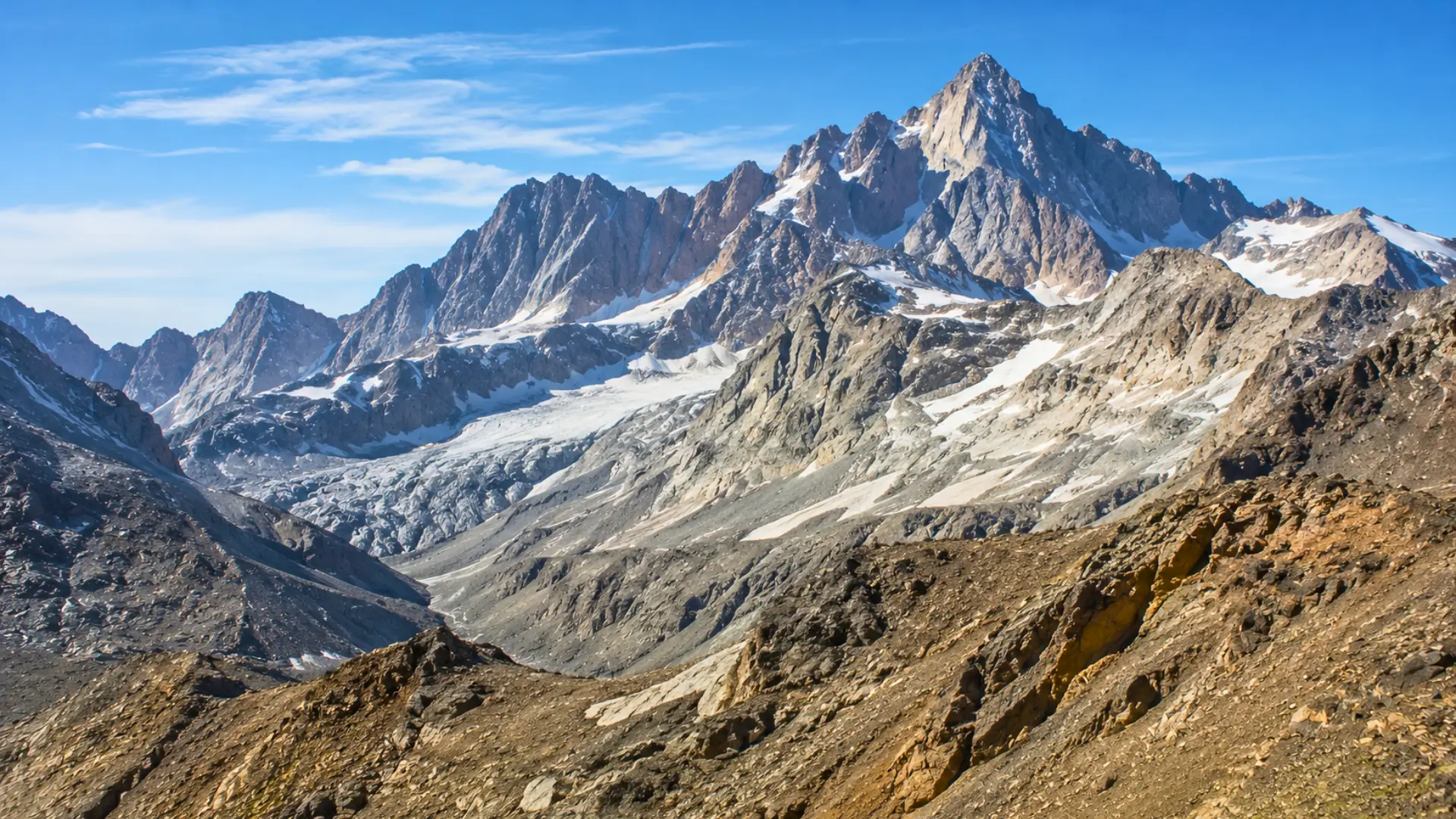
At an elevation of 2,500 meters, a refuge should not feel as though it is shaking like a house in an earthquake. Yet, in the Écrins massif, a massive rock block dislodged itself during the summer of 2023. A stark truth emerged: when permafrost thaws, the mountain sometimes loses its invisible adhesive.
This deeply frozen soil, stable for years, acts as a natural cement in rocky walls. However, as it warms, fractures widen, water seeps in, and instability follows. In Switzerland, the PERMOS scientific network has long been tracking lasting warming of alpine permafrost, with recent readings indicating unusually high temperatures at depth.
In the Écrins, this phenomenon is far from being a laboratory abstraction. It manifests as more frequent landslides, revised routes, and a constant need for vigilance. The spectacle of nature is no longer just in the scenery; it is also a troubling idea: even the rock in the mountains is becoming less stable.
Alpinism season shrinks, forcing adaptation
For a long time, high-altitude environments operated on a familiar timetable. Snow lingered longer, crevasses remained better filled, and rocks stayed relatively locked in place until mid-August. However, this routine is now disrupted. In many areas, the optimal climbing window is closing earlier, sometimes as soon as mid-July when heat already weakens routes.
This shift in the calendar has significant implications. Refuge guardians are opening facilities earlier, guides are adapting routes, and climbers are arriving sooner. In some rocky accesses above 3,000 meters, crampons are being replaced by sneakers by late summer. Yet, beneath this seemingly mundane change, a deeper transformation is taking place: the summer mountains are increasingly diverging from their former selves.
Access and infrastructure change due to glacier retreat
The Pré de Madame Carle has long served as an accessible entry point into the high mountains. It still leads to the Glacier Blanc and the Barre des Écrins. However, this popular site, welcoming tens of thousands of visitors annually, is experiencing the unsettling effects of shifting terrain. With glaciers retreating, materials being released, and rivers becoming more unpredictable, the landscape is changing rapidly.
When a glacier recedes, it does not merely leave behind a picturesque void; it unlocks massive rock formations, alters water flows, and intensifies flooding. The Écrins National Park is closely monitoring the retreat of the Glacier Blanc, observing a negative trend with a declining mass balance in recent years.
The consequences become tangible when a bridge disappears, a parking area is eroded, or a river suddenly bursts its banks. Following the exceptional floods of 2024 in the massif, the logic of infrastructure development is also evolving. Now, heavy and permanent structures are not always the best solution. In the high mountain, constructing lightweight, removable, and replaceable structures is sometimes necessary.
Life in the mountains must adapt from refuge to chapel
Climbing above 3,100 meters brings visitors to one of the most striking symbols of this transforming landscape: the Chapel of Mount Thabor. Set in a nearly surreal mineral backdrop, it appears to defy time. Yet today, it is not war or neglect threatening the chapel, but the gradual settling of the frozen ground beneath it.
Creaks, braces, and closures for public safety make this structure a tangible representation of what graphs sometimes struggle to illustrate. Warming is not only melting ice; it is impacting places of memory, increasing risks of landslides, floods, and destabilizations throughout the Alps. What is unfolding in the Hautes-Alpes extends far beyond just the alpine scenery.
Refuges are diversifying their activities, while valleys are rethinking their access routes. Meanwhile, visitors are discovering landscapes that are more unstable than they appear. Gradually, a pressing question arises, gaining ground as swiftly as the heat: what will the mountains look like when learning to admire them will transform into the continuous challenge of navigating their instability?