
Biodiversity
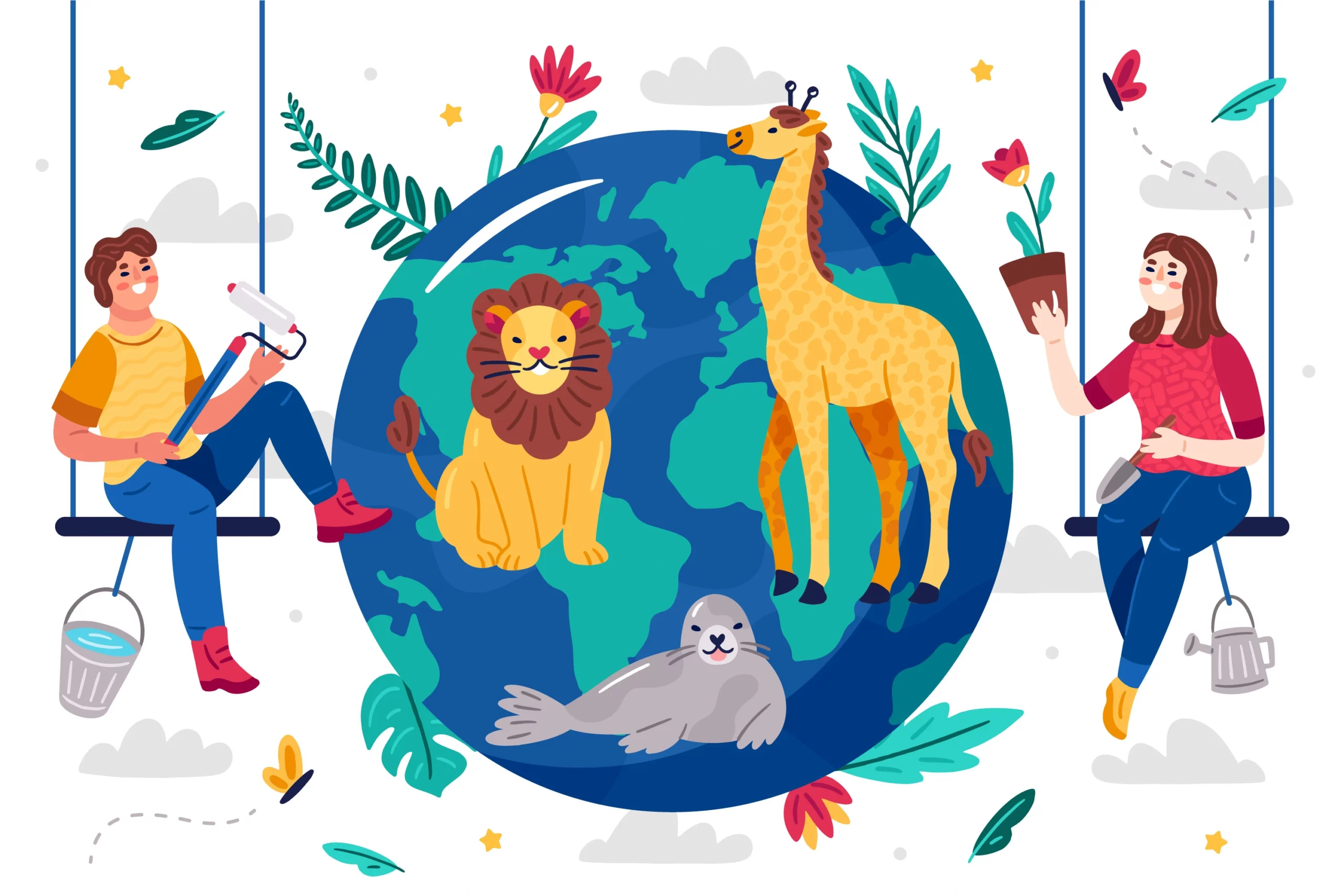
The variety of life forms present on Earth, including the different species of plants, animals, and microorganisms, their genetic variation, and the ecosystems they form.
Species
A group of individuals that can interbreed and produce fertile offspring in nature; the basic unit of biological classification.
Taxonomy
The science of naming, defining, and classifying organisms based on their characteristics and evolutionary relationships.
Carolus Linnaeus
A Swedish botanist known as the “father of modern taxonomy” who developed the binomial nomenclature system for naming and classifying organisms.
Binomial Nomenclature
The system of naming species with a two-part scientific name consisting of the genus name (capitalized) followed by the species name (lowercase), both in italics or underlined.
Genus
A taxonomic rank below family and above species, used to group species that are closely related and share a common ancestor.
Family
A higher taxonomic rank than genus and below order; it includes one or more genera that share certain common characteristics.
Order
A higher taxonomic rank than family and below class; it groups together families with similar characteristics.
Class
A higher taxonomic rank than order and below phylum; it includes orders with shared characteristics.
Phylum (or Division for plants)
A higher taxonomic rank than class and below kingdom; it groups together classes that have certain common features.
Kingdom
The highest taxonomic rank; organisms are grouped into one of the five kingdoms: Animalia, Plantae, Fungi, Protista, and Monera (or Bacteria).
Archaea
One of the three domains of life, consisting of single-celled microorganisms that are distinct from bacteria and share some similarities with eukaryotes.
Eukarya
One of the three domains of life, including all eukaryotic organisms, which have complex cell structures with a nucleus and membrane-bound organelles.
Bacteria
One of the three domains of life, comprising single-celled prokaryotic microorganisms that can be found in various environments.