
Q: What are cell organelles?
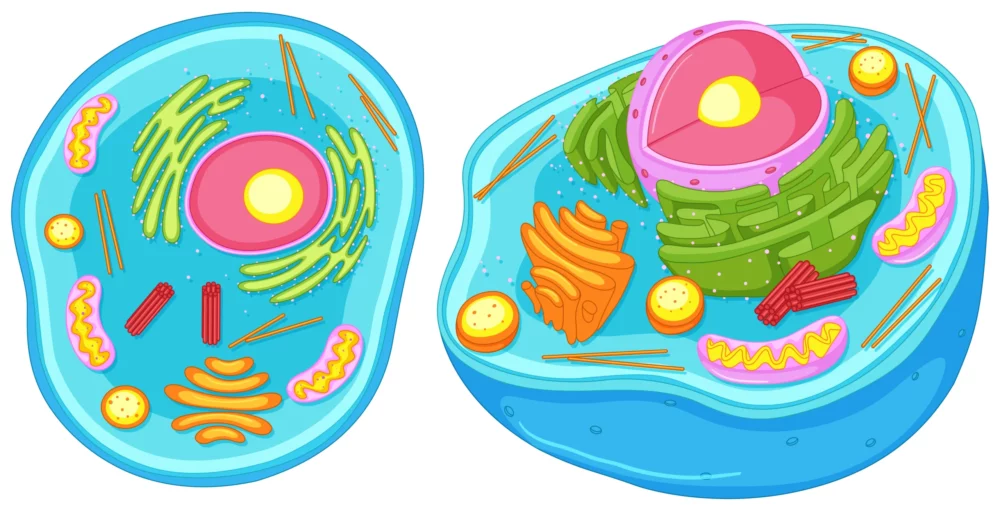
A: Cell organelles are specialized structures within a cell that perform specific functions. They are often referred to as the “organs” of a cell because they carry out various tasks necessary for the cell’s survival and function.
Q: What is the function of the cell membrane?
A: The cell membrane, also known as the plasma membrane, serves as the outer boundary of the cell. Its primary function is to control the passage of substances in and out of the cell, thereby regulating the cell’s internal environment and maintaining its integrity.
Q: What is the function of the nucleus?
A: The nucleus is the control center of a eukaryotic cell. Its main function is to store and protect the cell’s genetic material (DNA), which contains instructions for cell growth, development, and functioning. The nucleus also plays a role in regulating gene expression.
Q: What is the function of the mitochondria?
A: Mitochondria are often referred to as the “powerhouses” of the cell because they are responsible for generating energy in the form of adenosine triphosphate (ATP) through a process called cellular respiration. They convert nutrients and oxygen into ATP, which is used to fuel various cellular processes.
Q: What are ribosomes, and what is their function?
A: Ribosomes are small, granular organelles found in both prokaryotic and eukaryotic cells. Their primary function is to synthesize proteins by reading the genetic code stored in the mRNA (messenger RNA) and linking amino acids together in a specific sequence.
Q: What is the endoplasmic reticulum (ER), and what are its two types?
A: The endoplasmic reticulum (ER) is a network of membranous tubes and sacs within the cell. There are two types of ER: rough endoplasmic reticulum (RER), which is studded with ribosomes and involved in protein synthesis and modification, and smooth endoplasmic reticulum (SER), which is involved in lipid synthesis, detoxification, and calcium storage.
Q: What is the Golgi apparatus?
A: The Golgi apparatus, often called the Golgi complex or Golgi body, is involved in processing, sorting, and packaging macromolecules like proteins and lipids for transport within or outside the cell. It consists of flattened membrane-bound sacs called cisternae.
Q: What is the function of lysosomes?
A: Lysosomes are membrane-bound organelles containing digestive enzymes. Their main function is to break down waste materials, cellular debris, and foreign invaders like bacteria or viruses. Lysosomes are often referred to as the “cell’s garbage disposal.”
Q: What is the function of the cytoskeleton?
A: The cytoskeleton is a network of protein filaments and tubules that provides structural support to the cell and is involved in various cellular processes. It helps maintain cell shape, facilitates cell movement, and is essential for intracellular transport.
Q: What are chloroplasts, and where are they found?
A: Chloroplasts are organelles found in plant cells and some algae. They are responsible for photosynthesis, the process by which plants convert light energy into chemical energy (glucose) using chlorophyll, a green pigment. Chloroplasts contain stacks of thylakoid membranes where photosynthesis occurs.
Q: What is the function of the central vacuole in plant cells?
A: The central vacuole is a large, membrane-bound organelle found in plant cells. Its primary functions include storing water, nutrients, and waste products, as well as maintaining turgor pressure to provide structural support to the plant. It also plays a role in regulating ion concentrations in the cell.