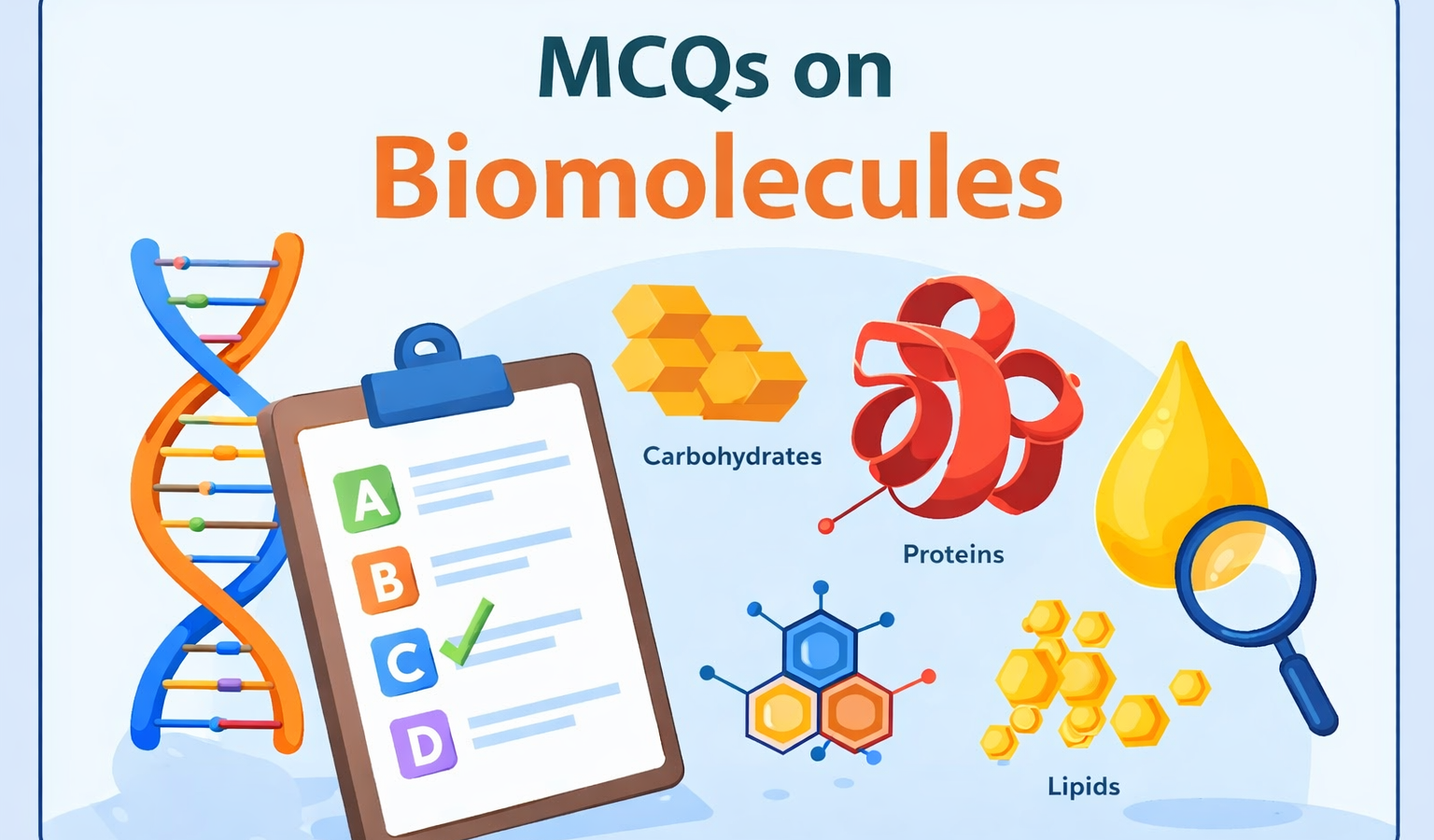
Biomolecules are essential chemical compounds that form the basis of life. These include carbohydrates, proteins, lipids, and nucleic acids. Practicing MCQs on biomolecules helps students strengthen their conceptual understanding and prepare effectively for competitive exams like NEET and other biology tests.
What are Biomolecules?
Biomolecules are organic molecules present in living organisms that perform vital functions. They are broadly classified into carbohydrates, proteins, lipids, and nucleic acids.
Biomolecules MCQs
Which of the following is a monosaccharide?
A. Starch
B. Glycogen
C. Glucose
D. Cellulose
Answer: C. Glucose
Explanation: Glucose is a simple sugar (monosaccharide), whereas starch, glycogen, and cellulose are polysaccharides.
The building blocks of proteins are:
A. Fatty acids
B. Amino acids
C. Nucleotides
D. Monosaccharides
Answer: B. Amino acids
Explanation: Proteins are polymers made up of amino acids linked by peptide bonds.
Which biomolecule stores genetic information?
A. Proteins
B. Lipids
C. Nucleic acids
D. Carbohydrates
Answer: C. Nucleic acids
Explanation: DNA and RNA are nucleic acids responsible for storing and transmitting genetic information.
Which of the following is a lipid?
A. Enzyme
B. Cholesterol
C. Hemoglobin
D. DNA
Answer: B. Cholesterol
Explanation: Cholesterol is a lipid molecule important for cell membrane structure.
Enzymes are:
A. Lipids
B. Carbohydrates
C. Proteins
D. Vitamins
Answer: C. Proteins
Explanation: Most enzymes are proteins that act as biological catalysts.
Which carbohydrate is known as animal starch?
A. Cellulose
B. Glycogen
C. Glucose
D. Fructose
Answer: B. Glycogen
Explanation: Glycogen is the storage form of glucose in animals.
DNA stands for:
A. Deoxyribose Nucleic Acid
B. Deoxyribonucleic Acid
C. Dioxyribonucleic Acid
D. Deoxyribose Acid
Answer: B. Deoxyribonucleic Acid
Which of the following is NOT a biomolecule?
A. Protein
B. Lipid
C. Mineral
D. Nucleic acid
Answer: C. Mineral
Explanation: Minerals are inorganic substances, not biomolecules.
Peptide bonds are found in:
A. Carbohydrates
B. Proteins
C. Lipids
D. DNA
Answer: B. Proteins
Which biomolecule provides long-term energy storage?
A. Carbohydrates
B. Proteins
C. Lipids
D. Vitamins
Answer: C. Lipids
Key Takeaways
- Biomolecules include carbohydrates, proteins, lipids, and nucleic acids
- Proteins are made of amino acids
- DNA and RNA carry genetic information
- Lipids store long-term energy
- Carbohydrates provide quick energy
Practice More MCQs
👉 MCQs on cell biology
👉 MCQs on Breathing and Exchange of Gases
👉 MCQs on Respiration in plant
FAQs on Biomolecules MCQs
What are biomolecules in biology?
Biomolecules are organic compounds like carbohydrates, proteins, lipids, and nucleic acids found in living organisms.
Why are biomolecules important for exams?
They are a core topic in biology and frequently asked in competitive exams like NEET.
How to prepare biomolecules MCQs?
Focus on concepts, practice regularly, and revise important definitions and functions.